


Best practices for maintaining heavy digging equipment
 Apr 20, 2026|
 View:463
You keep heavy digging equipment working well by using good habits that focus on taking care of it early. Knowing your heavy construction machinery helps you see problems before they get worse. Cleaning every day and checking the equipment closely help you find things that could hurt the machine. When you check fluid levels, pay attention to maintenance alerts, and fix fault codes, you stop the equipment from breaking down and make it last longer. Teaching operators the right way to use the equipment keeps everyone safe and helps the machine work the same way each time.
Heavy Equipment Maintenance Tips
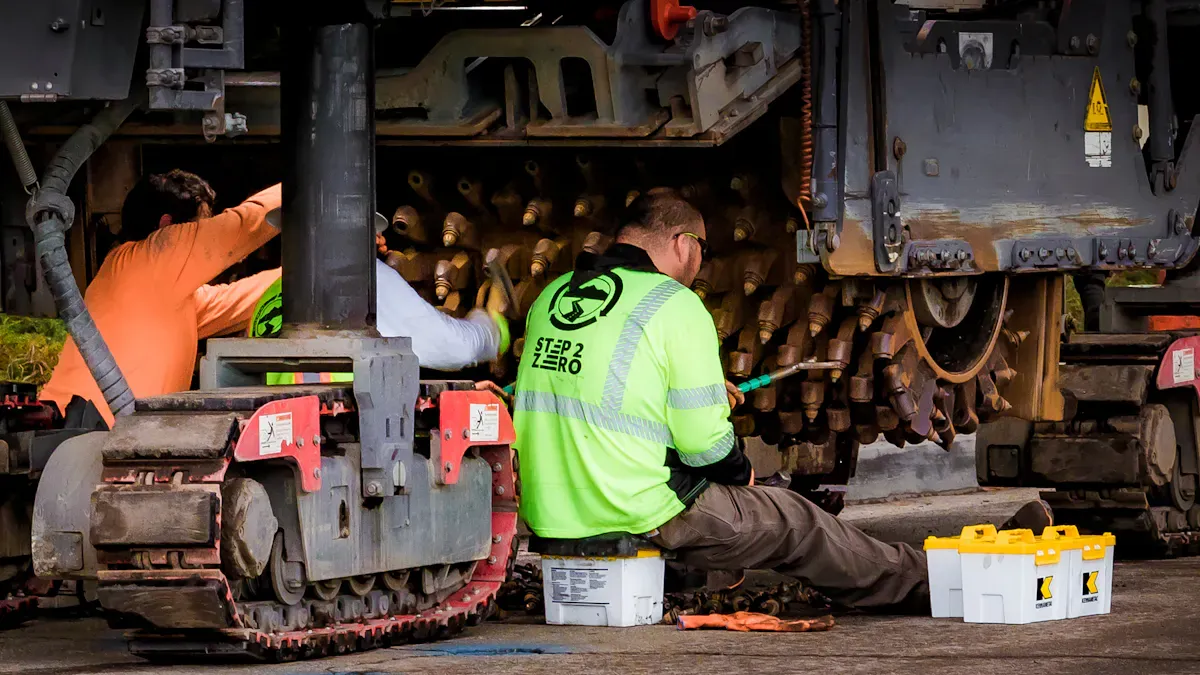
Daily Cleaning and Inspection
Start each shift by walking around your machine. This helps you find problems before they get worse. Cleaning often stops dirt and debris from hurting the machine. Clean both the outside and the operator cab. Use a checklist so you do not forget anything.
Tip: Checking your machine every day helps you find small problems early and keeps it safe to use.
Here is a table that shows the most important things to check for heavy digging equipment:
Check | Description |
|---|---|
Fluid Levels and Leak Inspection | Look at engine oil, hydraulic fluid, coolant, and DEF levels. Check for leaks under the machine. |
Hoses, Belts, and Electrical Connections | Look at hoses for damage, belts for tightness, and make sure battery connections are tight. |
Undercarriage, Tracks, and Tire Pressure | Remove debris from tracks, check track tightness, and look at tire pressure. |
Safety Features and Operator Cab Readiness | Test alarms, check ROPS/FOPS, and make sure you can see well in the cab. |
Attachments, Pins, and Structural Wear | Look at attachment points, grease pivot pins, and check for wear. |
You should also:
Walk around the machine to look for leaks, broken hoses, and missing guards.
Make sure all gauges work when the machine is on.
Clean lines, nozzles, debris tanks, and filters every day.
Write down operating hours and any problems you see.
Daily checks help keep you safe and your machine in good shape. You will have less downtime and get more work done if you check your machine every day. Doing these simple things is the first step in preventative maintenance.
Fluid Checks and Leak Detection
Check all fluids before you start the machine. This means engine oil, hydraulic fluid, coolant, and DEF. If fluids are low or dirty, the machine can get damaged. Test drilling fluids at least once every shift. Check for density, viscosity, and gel strength. Add or change fluids as needed for the job.
Leaks happen a lot with heavy equipment. Look for leaks under the machine and near hoses or fittings. If you see a leak, fix it right away to stop more damage. The table below shows the most common leaks and what causes them:
Type of Leak | Causes | Symptoms |
|---|---|---|
External Leak | Worn seals, broken hoses, loose connections, cracked cylinders | You see oil, lose pressure, work slower, or cause hazards |
Internal Leak | Worn seals, broken hoses, loose connections, cracked valves | Lose pressure, work slower, or cause hazards |
Always follow the rules for checking fluids. Keep fluids filled and clean as needed. Keep the area clean and watch for changes in how the machine works.
Undercarriage Care
Pay close attention to the undercarriage every day. The undercarriage holds up the machine and wears out fast. Clean it every day to get rid of mud, rocks, and debris. This helps stop early wear and keeps the machine working well.
Follow these best practices for undercarriage care:
Clean the undercarriage every day to stop downtime and repairs.
Look for too much or uneven wear.
Use the right techniques, especially on slopes or rough ground.
Grease bushings and moving parts to stop friction and block debris.
Keep track tension correct.
Note: Cleaning and checking the undercarriage often helps you find problems early and makes your equipment last longer.
Know your machine and follow a plan that fits your work. Heavy equipment maintenance works best with daily cleaning, fluid checks, and undercarriage care. These tips help your machines stay safe and reliable.
Lubrication and Replacement
Choosing Lubricants
You need to pick the right lubricants for your heavy digging equipment. If you use the wrong one, your machine can wear out faster and cost more to fix. Think about these things when you choose a lubricant:
The thickener and base oil in grease help it work well in your machine.
Extreme pressure is important for hard jobs like mining.
Some greases are better for hot or cold places.
The metal you drill changes which lubricant you need. Hard metals need strong cutting fluids.
Tool compatibility matters. Some lubricants only fit certain tools.
Good lubricants protect your equipment better and last longer.
Lubricants must stay strong under high heat and pressure.
Always follow safety rules. Use good ventilation and wear safety gear.
Lubrication lowers friction, so there is less heat and wear. Using the right lubricant helps your equipment run smoother and last longer. High-performance lubricants can cut surface wear by more than half.
Lubrication Schedule
You need to lubricate your equipment on a regular schedule. Each machine has its own needs. Check your manual for the best times. The table below shows how often to lubricate common machines:
Equipment Type | Recommended Lubrication Frequency |
|---|---|
Excavators | Follow the manufacturer's instructions. Lubricate daily or more if you work in tough conditions. |
Skid Steers | Check the manual. Lubricate as often as the manufacturer says. |
General Heavy Equipment | Grease parts regularly. Do not over-grease or under-grease. |
Lubricating often stops wear and tear. You can avoid breakdowns and save money on repairs. Keeping records shows you follow safety rules and care for your equipment.
Common Mistakes
Many operators make mistakes with lubrication. These mistakes can make your equipment break sooner and cause problems. The table below lists common mistakes and what happens:
Common Mistakes in Lubrication | Consequences |
|---|---|
Lack of proper training | Higher risk of equipment failure |
Inadequate lubrication schedules | Shorter equipment life |
Use of incorrect lubricants | Damage to machine parts |
Always check fluid and lubricant levels before each shift. Make sure you use the right lubricant for your machine and job. Good alignment of moving parts helps stop wear. Bad alignment causes more friction and faster damage. Watch out for these mistakes to keep your equipment safe and working well.
Monitoring Wear and Tear
Identifying Wear Points
It is important to find wear points early. This helps your heavy digging equipment work well. Look for changes in how your machine looks, sounds, and works. Use the table below to spot common signs of wear:
Indicator Type | Description |
|---|---|
Visual Signs | Chipping, rounded cutting edges, cracks, and color changes from heat. |
Auditory and Tactile | More noise, harder to use, and extra shaking that can mean inside problems. |
Performance Indicators | Slower digging, overheating, and slipping that show tools are not working right. |
Check these signs every day. Watch for anything different. If you see something strange, fix it fast to stop bigger problems.
Early Issue Detection
You can spend less on repairs if you find problems early. This also helps you avoid stopping work. Try these ways to catch issues before they get worse:
Preventative maintenance stops surprise breakdowns.
Regular checks help your machine work better and cost less to fix.
Finding wear points early makes your job easier.
Technology like monitoring systems can find problems before they get bad.
Sensors and tracking tools warn you about odd patterns.
A good maintenance plan makes work orders when sensors find problems.
Equipment history helps technicians fix things faster.
Tip: Finding problems early keeps your equipment working and saves money.
Replacing Parts
Replace worn parts as soon as you find them. Doing this lowers your costs over time. Regular maintenance stops expensive repairs and replacements. Taking care of your equipment keeps it reliable and stops surprise bills. When you change parts on time, your machines keep working and your investment stays safe.
Remember: Fixing and replacing parts quickly saves money and cuts downtime.
Operator Training for Heavy Digging Equipment
Proper Operation
You help keep heavy digging equipment working well. When you use the right techniques, the machine lasts longer. You do less maintenance. Trained operators check the machine often. They watch how it works. You can spot problems early and stop breakdowns. You follow safety rules. This lowers accidents and saves money.
Trained operators do daily checks.
You watch the machine and see changes.
You follow safety rules to stop accidents.
You know when to do maintenance and avoid surprises.
Tip: Training helps you use equipment safely and do your job well.
Ongoing Education
You need to keep learning new ways to work. Training teaches you how to adjust seats and controls. You learn safe ways to get in and out of machines. You practice good posture and notice discomfort early. Stretching helps you avoid pain.
Take short breaks every 30 minutes.
Check your posture during your shift.
Write down any pain and tell someone.
Use feedback from others to get better.
Industry rules like NIOSH and ISO help keep you safe. Manufacturers and groups give special training. These programs teach you how to use features and stay safe.
Accountability
Being responsible helps machines last longer and keeps records safe. You take care of the equipment by checking it often. Finding problems early stops big repairs. You follow safety rules and work procedures.
Evidence Type | Description |
|---|---|
Operator Rounds | You find problems early and stop downtime. |
Culture of Accountability | You take responsibility for equipment health and safety. |
Safety Compliance | You follow rules and keep the workplace safe. |
Operational Efficiency | You work efficiently, extending equipment life and reducing accidents. |
Digital records help you track maintenance and share info. You help keep the workplace clean and safe for everyone.
Maintenance Records and Scheduling
Maintenance Logs
You must keep good maintenance logs for your heavy digging equipment. These logs help you remember every repair and service. When you write down each maintenance job, planning future repairs gets easier. Logs give you many benefits:
Your equipment lasts longer because regular care stops early damage.
Machines work better and faster when you keep them maintained.
You save money by stopping big breakdowns and costly fixes.
Safety improves since you check that safety features work right.
You have less downtime because regular checks find problems early.
You can sell your equipment for more if you show full maintenance history.
You can plan work better and keep projects moving.
Maintenance logs also help you follow safety rules. You write down important details about repairs, checks, and maintenance. Health and safety teams use these logs to check if you follow rules and make emergency plans. Inspectors look at your logs to see if you meet building codes and standards.
Following Manuals
Always use the manufacturer manuals for maintenance. Manuals give you the best steps for service and repairs. They help you keep your equipment safe and working well. The table below shows why manuals are important:
Aspect | Importance |
|---|---|
Safety | Helps stop accidents and keeps everyone safe. |
Equipment Reliability | Makes sure machines work right and last longer. |
Cost-effectiveness | Cuts downtime and saves money by stopping problems early. |
Regular mechanical checks help you learn about your equipment. Preventative maintenance saves money in the long run. Finding problems early stops bigger repairs.
Professional Inspections
You should plan regular inspections by experts. These checks keep your equipment in great shape. Use these times for heavy digging equipment:
Service Interval | Actions Required |
|---|---|
Every 250 Hours | Change engine oil and filter, check air filter, check track tension |
Every 500 Hours | Change hydraulic oil filter, grease pivot points, check cooling system |
Every 1,000 Hours | Change fuel filters, change hydraulic oil, full machine inspection |
Professional inspections help you find problems early and keep your equipment working well. You protect your equipment and avoid expensive repairs.
Excavators: Special Maintenance Considerations
Excavator Wear Points
You need to watch the main wear points on excavators. These machines work in tough places every day. The undercarriage gets the most stress, especially on big excavators. Clean and lubricate the undercarriage often. Check it for signs of damage or wear. The bucket wears out quickly. Look at the bucket for cracks and worn teeth. Change broken teeth to keep digging easy. You should also check belts, hoses, seals, and safety devices. These parts can break without warning. Checking often helps you stop sudden breakdowns.
Undercarriage: Clean, lubricate, and check for damage.
Bucket: Look for cracks and check teeth.
Components: Check belts, hoses, seals, and safety devices.
Tip: Finding wear early on big excavators saves time and money.
Cleaning After Use
Cleaning excavators after each use stops long-term damage. Start by rinsing with a hose or pressure washer. Remove loose dirt, mud, and debris. Focus on the undercarriage, especially for big excavators, because debris builds up fast. Use gentle cleaners. Do not use harsh chemicals that can hurt paint or metal. Clean attachments by themselves to reach all surfaces. Use soft brushes or cloths to stop scratches. Dry the machine well to stop rust and moisture. Keep vents, grilles, and air intakes clear to stop blockages.
Rinse off dirt and debris.
Clean undercarriage and attachments.
Use soft brushes and gentle cleaners.
Dry all surfaces completely.
Note: A clean excavator works better and lasts longer.
Routine Checks
You need to do routine checks to keep excavators safe. Check fluid levels like engine oil, hydraulic fluid, coolant, and fuel. Look for leaks around the machine. Check the undercarriage, tracks, rollers, idlers, and sprockets for wear. Clean or change air, hydraulic, and fuel filters. Look at belts and hoses for cracks or leaks. Test all lights, signals, and alarms. Make sure controls and safety devices work right. Check the bucket and attachments for damage. Lubricate all grease points. Read the operator’s manual and update the maintenance log after each check.
Routine Check | What to Do |
|---|---|
Fluid Levels | Check and add as needed |
Leaks | Look and fix right away |
Undercarriage | Check for wear and clean debris |
Filters | Clean or change often |
Belts and Hoses | Look for cracks or leaks |
Lights and Signals | Test to make sure they work |
Controls and Safety | Check all work right |
Bucket and Attachments | Look for damage or wear |
Greasing | Lubricate all points |
Documentation | Update logs and read manuals |
Regular checks keep big excavators safe and reliable for every job.
You can make heavy digging equipment last longer and stay safer with a good maintenance plan. Doing regular checks, teaching operators, and keeping good records help you find problems early. This also makes the equipment safer to use. Studies show that checking machines often and using predictive maintenance can cut downtime and save more than $150,000 over the life of the equipment. You should use checklists, train your team, and use GPS tracking to make the equipment safer and work better. Look at your maintenance routines often to protect your heavy digging equipment and keep every job site safe.
Plan regular inspections for heavy digging equipment.
Teach operators to focus on safety and correct use.
Use checklists and logs to track maintenance and safety.
FAQ
How often should you inspect heavy digging equipment?
Check your equipment every day before you use it. This helps you find problems early. Regular checks keep your machine safe and working well.
What fluids do you need to check most often?
Look at engine oil, hydraulic fluid, coolant, and DEF every day. These fluids help your equipment run right. If fluids are low or dirty, the machine can get damaged.
Why does operator training matter for equipment maintenance?
Operator training teaches you to use machines safely and the right way. Trained operators see problems early. Good training stops accidents and helps machines last longer.
When should you replace worn parts?
Change worn parts as soon as you see damage or the machine works worse. Fixing things fast stops bigger problems. You save money and keep working.
Recent News
1.What to consider when buying a Hyundai 300 excavator for construction projects
2026-04-072.Where to find Hyundai HX245 excavators for sale
2026-04-033.How the Hyundai HX300 compares to other excavators in its class
2026-03-304.How much does a Hyundai excavator cost
2026-02-055.How much does a crawler excavator cost in 2026
2025-12-12


