


Analysis of Hyundai 220 Excavator Price in India: Complete Investment Guide for 2025
 Oct 16, 2025|
 View:4849
India's construction and infrastructure sectors continue their remarkable expansion, with government mega-projects and private development driving unprecedented demand for reliable heavy machinery. Businesses seeking to enter or expand within the excavation and earthmoving sector face critical decisions regarding equipment investment. Understanding price structures, operational costs, and long-term value becomes essential for sustainable business growth. This comprehensive analysis examines the factors influencing hyundai 220 excavator price in india's evolving industrial landscape, helping contractors and construction companies make informed investment decisions for 2025 and beyond.
Key Takeaways
- India's construction equipment market is projected to reach USD 12.76 billion by 2030, growing at 8.33% CAGR
- Hyundai 220 excavator price in india varies significantly based on model variants, technology features, and regional factors
- New equipment offers latest technology and full warranties while used machines provide budget-friendly alternatives
- Import duties, GST, and state-level taxes significantly impact final equipment pricing
- Fuel-efficient models with advanced hydraulic systems reduce operational costs by 15-25% annually
- Proper supplier selection and comprehensive after-sales support directly affect total cost of ownership
India's Construction Equipment Market
Understanding India's Construction Equipment Landscape
Current Industry Dynamics
India's construction equipment sector has experienced substantial growth driven by infrastructure modernization and urbanization. The government's National Infrastructure Pipeline, with investments exceeding USD 1 trillion by 2025, creates consistent demand for excavation equipment across highway construction, metro rail projects, and smart city development. Major industrial centers in Mumbai, Delhi-NCR, Bangalore, Chennai, and Pune account for significant portions of hyundai 220 excavator installations nationwide. This concentration reflects both infrastructure advantages and proximity to key construction markets.
The infrastructure sector remains the largest consumer of medium excavators, with government projects and private real estate development expanding equipment requirements. India's construction equipment industry sales reached 135,650 units in FY24, marking a 26% increase from the previous year, demonstrating robust market expansion. Mining operations, including coal, iron ore, and minerals extraction, also contribute to steady demand growth. Recent sustainability initiatives have prompted contractors to seek equipment with improved fuel efficiency and lower emissions, adding another dimension to machinery selection criteria.
The Indian Construction Equipment Manufacturers Association (ICEMA) forecasts that India's construction equipment market will emerge as the world's second-largest by 2030, demonstrating the market's exceptional growth trajectory.
Investment Drivers
Several factors motivate businesses to invest in hyundai 220 excavator technology in India:
Infrastructure Boom: The expanding infrastructure pipeline and rising construction activity drive excavator demand across multiple project categories. India's industrial and warehousing sector grew 33% year-over-year in H1 2025, supporting increased equipment investments.
Equipment Modernization: Contractors replacing aging fleets with modern excavators gain productivity advantages, fuel efficiency improvements, and compliance with evolving emission standards. Technology upgrades deliver measurable operational benefits.
Operational Efficiency: Advanced excavator systems reduce fuel consumption, minimize maintenance downtime, and improve operator productivity, enhancing profit margins in competitive markets. Modern machines deliver superior performance compared to older equipment.
Project Requirements: Complex infrastructure projects demand reliable equipment meeting strict quality and safety standards. Contractors with modern fleets secure premium contracts and maintain competitive advantages.
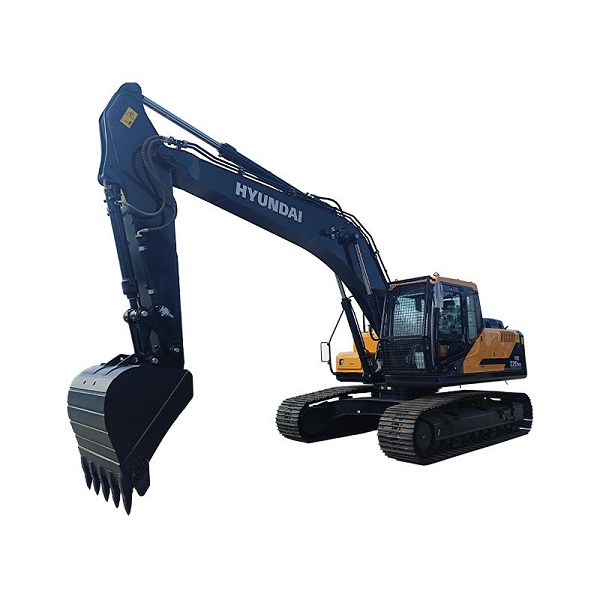
Price Range Analysis for Hyundai 220 Excavators
New Equipment Pricing
New hyundai 220 excavator models represent comprehensive solutions with latest technology, full manufacturer warranties, and predictable performance characteristics. Pricing in India varies based on model specifications and feature configurations.
Standard Models: Basic Hyundai 220 excavator configurations with conventional hydraulic systems and standard operator cabins position at more accessible price points. These machines provide reliable performance for general excavation, earthmoving, and construction applications. Standard models include essential features ensuring productivity while maintaining cost efficiency.
SMART Series: Advanced variants incorporating intelligent control systems, enhanced fuel efficiency technology, and superior hydraulic performance command premium positioning. The R220LS SMART Plus features a 148 HP Cummins engine with optimized fuel and lube oil consumption, delivering improved operational economics. These models feature electronic monitoring systems, optimized engine management, and improved operator interfaces.
Premium Configurations: Top-specification models with comprehensive technology packages, advanced telematics integration, climate-controlled cabins, and extended warranty coverage represent the highest price tier. Premium excavators suit demanding applications requiring maximum reliability, operator comfort, and fleet management capabilities.
Pricing structures typically include base equipment cost, but buyers should verify whether delivery charges, pre-delivery inspection, initial service, and registration assistance are incorporated or charged separately.
Used and Refurbished Equipment Market
India's construction equipment market maintains an active secondary market offering budget-conscious alternatives to new equipment purchases.
Recent Used Equipment (1-3 Years): Lightly used hyundai 220 excavator units with verified service records and moderate operating hours typically position at 65-75% of new equipment prices. These machines offer substantial savings while retaining significant useful life and often include remaining manufacturer warranty coverage.
Mid-Life Equipment (4-6 Years): Excavators with moderate age and 4,000-7,000 operating hours generally price at 45-60% of new equipment values. Condition varies significantly based on maintenance history and application intensity. Thorough inspection becomes essential before purchase.
Older Equipment (7+ Years): Mature machines exceeding seven years or 8,000 operating hours typically cost 30-45% of new equipment prices. While offering maximum affordability, these units may require significant maintenance investment and lack modern technology features. Buyers should budget for potential refurbishment costs.
Certified Pre-Owned Programs: Some authorized dealers offer certified pre-owned excavators with inspection certifications, limited warranties, and reconditioning services. These programs provide middle-ground solutions between new and conventional used equipment, typically pricing at 55-70% of new equipment costs.
Price Comparison by Equipment Type
| Equipment Category | Technology Level | Typical Applications | Investment Considerations |
Standard New | Conventional controls | General construction, earthmoving | Lower initial cost, proven reliability |
SMART Series New | Intelligent systems | High-utilization projects | Superior fuel efficiency, productivity gains |
Premium New | Full technology package | Demanding applications | Maximum capability, comprehensive support |
Recent Used (1-3 yr) | Varies by model year | Budget-conscious projects | Reduced cost, remaining warranty |
Mid-Life Used (4-6 yr) | Older technology | Secondary applications | Affordable option, higher maintenance risk |
Factors Affecting Hyundai 220 Excavator Prices
Technical Specifications
Several technical features significantly influence hyundai 220 excavator price in india:
Engine Technology: Modern engines meeting current emission standards with advanced fuel injection systems, optimized combustion, and electronic management cost more than conventional engines. The Hyundai HX220A L features a 129 kW (173HP) Stage V Cummins engine with innovative after-treatment systems that reduce emissions and maintenance requirements while delivering excellent fuel economy.
Hydraulic System Sophistication: Advanced hydraulic architectures with electronic flow control, energy regeneration, and intelligent power management increase equipment costs by 8-12% compared to conventional systems. These technologies improve cycle times, reduce fuel consumption, and enhance operator productivity.
Operator Cabin Features: Basic cabins with essential amenities differ substantially from premium configurations featuring climate control, suspension seating, digital displays, and advanced visibility systems. Cabin quality directly affects operator comfort and productivity during extended work shifts.
Telematics Integration: Excavators equipped with GPS tracking, remote monitoring, fuel consumption analysis, and predictive maintenance systems command premium pricing. Telematics technology enables fleet optimization and proactive maintenance scheduling, reducing total ownership costs despite higher acquisition prices.
Supply Chain Considerations
The origin and delivery of hyundai 220 excavator units substantially impact final costs in India:
Import Duties and Taxes: Construction equipment faces Goods and Services Tax (GST) at applicable rates, import duties on imported components or complete units, and various state-level charges. Tax components can increase base equipment costs significantly depending on manufacturing origin and assembly location.
Currency Exchange Fluctuations: Equipment with imported components faces currency risk between Indian Rupee and major currencies. INR depreciation against US Dollar, Euro, or Korean Won increases equipment costs for buyers, while favorable exchange rates may create purchasing opportunities.
Logistics and Transportation: Delivering heavy equipment from manufacturing facilities or ports to customer locations incurs substantial freight costs. Distance, route accessibility, and special handling requirements affect transportation expenses. Remote locations face higher delivery charges.
Dealer Network Structure: Equipment purchased through established dealer networks includes service infrastructure access, technical support capabilities, and warranty administration. Direct imports or independent sellers may offer lower prices but lack comprehensive support networks.
Vendor Selection Impact
Choosing the right hyundai 220 excavator supplier affects both purchase price and long-term ownership costs:
Authorized Dealerships: Official dealers maintain manufacturer relationships, genuine parts inventory, trained technicians, and warranty processing capabilities. While pricing may exceed independent sellers, comprehensive support infrastructure justifies the investment for most buyers.
After-Sales Service Infrastructure: Dealers with extensive service networks, mobile service units, and 24/7 emergency support minimize equipment downtime. Service quality significantly affects operational continuity and total ownership costs over equipment lifespan.
Training Programs: Quality suppliers provide operator training, maintenance instruction, and safety certification programs. Proper training improves equipment productivity, reduces operator errors, and extends machinery life through correct usage practices.
Financing Arrangements: Established dealers often facilitate financing through banking partnerships, equipment leasing companies, or manufacturer financing programs. Flexible payment terms improve equipment accessibility despite higher initial costs.
Total Cost of Ownership Analysis
Initial Investment Breakdown
Understanding complete startup costs beyond the hyundai 220 excavator purchase price helps businesses budget accurately:
Core Equipment Cost: The excavator itself represents 75-85% of total initial investment depending on configuration and specifications selected.
Auxiliary Equipment Requirements: Essential supporting equipment includes:
- Heavy-duty transport trailer: Required for moving equipment between job sites
- Basic attachment set: Standard bucket, additional bucket sizes for varied applications
- Quick coupler system: Enables rapid attachment changes, improving versatility
- Safety and operational accessories: Fire extinguisher, first aid kit, operator manual
Initial Service and Setup: Professional pre-delivery inspection, fluid filling, initial lubrication, and operational testing ensure equipment readiness. Budget 1-2% of equipment cost for comprehensive preparation.
Registration and Compliance: Government registration, road tax, insurance activation, and documentation processing require administrative investment. State requirements vary, affecting total costs.
Operator Training: Comprehensive operator training programs, safety certification, and maintenance instruction investment ensures proper equipment utilization and longevity.
Operational Expenses
Ongoing costs significantly impact profitability and should inform machinery selection decisions:
Fuel Consumption: Diesel represents the largest operational expense for excavators. Standard 20-ton excavators consume approximately 15 liters per hour under normal working conditions, while fuel-efficient variants with advanced systems can reduce consumption to 12-16 liters hourly. At India's diesel rates, fuel costs constitute 40-50% of total operating expenses.
Maintenance Requirements: Regular scheduled maintenance including oil changes, filter replacements, hydraulic fluid servicing, and preventive inspections costs approximately 2-4% of equipment value annually. Quality excavators from reputable manufacturers typically require less frequent maintenance than budget alternatives.
Operator Costs: Skilled excavator operators command monthly salaries ranging from ₹25,000-₹50,000 depending on experience, location, and project complexity. Proper training investments improve operator efficiency and equipment care.
Insurance Premiums: Comprehensive equipment insurance covering theft, damage, and third-party liability costs 2-4% of equipment value annually. Insurance becomes essential for protecting substantial machinery investments.
Parts and Repairs: Unscheduled repairs and component replacements vary based on equipment quality, operating conditions, and maintenance discipline. Reserve 3-5% of equipment value annually for unexpected repair requirements.
Return on Investment Calculations
Evaluating ROI helps businesses select appropriately priced equipment matching their financial objectives:
High-Utilization Scenarios: Projects requiring 180-200 hours monthly excavator usage generate substantial revenue opportunities. Equipment operating at high utilization rates recovers investment costs within 24-36 months while generating consistent profits. Proper maintenance discipline ensures sustained performance throughout recovery period.
Moderate-Utilization Projects: Construction businesses deploying excavators 120-150 hours monthly experience longer ROI periods of 36-48 months. Equipment selection should balance capability requirements against utilization rates to optimize financial returns.
Seasonal Operations: Contractors with seasonal work patterns face extended ROI periods due to idle equipment during off-seasons. These businesses should consider used equipment, rental arrangements, or partnerships to reduce capital requirements and improve returns.
Comprehensive financial modeling incorporating equipment costs, operating expenses, revenue generation, and alternative investment opportunities guides optimal decision-making.
Regional Price Variations in India
Major Construction Markets
Hyundai 220 excavator availability and pricing vary across India's key construction regions:
Mumbai and Maharashtra: As India's commercial capital and major construction market, Mumbai offers competitive equipment pricing through concentrated dealer presence. Businesses benefit from multiple supplier options, comprehensive service networks, and proximity to equipment importation points. Maharashtra's industrial infrastructure supports efficient equipment deployment and maintenance.
Delhi-NCR: The national capital region represents India's second-largest construction equipment market. The Ministry of Road Transport and Highways pledged completion of 3,582 km of under-construction national highways in the North-East by 2028, creating sustained equipment demand. Delhi-NCR dealers maintain substantial inventory and provide competitive pricing matched by comprehensive service capabilities.
Bangalore and Karnataka: South India's technology and manufacturing hub offers growing construction equipment markets. Bangalore's infrastructure expansion and industrial development support equipment investments. Regional dealers provide competitive pricing with established service networks across Karnataka.
Chennai and Tamil Nadu: This southeastern industrial center hosts significant construction activity and equipment demand. Chennai's port infrastructure facilitates equipment imports, contributing to competitive pricing. Tamil Nadu's manufacturing sector generates consistent excavator requirements.
Other Markets: Businesses in tier-2 cities like Pune, Ahmedabad, Hyderabad, Kolkata, or Lucknow access equipment through regional dealer networks. Pricing may reflect transportation costs and smaller market scales, though service quality typically remains consistent with major markets.
Import vs. Domestic Assembly
The equipment sourcing approach impacts pricing and performance characteristics:
Fully Imported Units: Excavators manufactured and imported as complete units offer latest technology and proven reliability. Pricing reflects full import duties, currency exchange, and international logistics costs. Most contractors prefer fully imported equipment despite premium pricing due to quality assurance and comprehensive warranty coverage.
Locally Assembled Equipment: Some manufacturers operate assembly facilities within India, combining imported major components with local fabrication. These units may cost slightly less than fully imported equivalents while maintaining quality standards. Local assembly reduces certain import costs and supports quicker delivery timelines.
Component Sourcing Variations: Equipment with varying ratios of imported versus domestic components displays different price points. Buyers should verify component origins and quality certifications regardless of assembly location to ensure performance expectations are met.
Selecting the Right Hyundai 220 Excavator Supplier
Evaluation Criteria
Identifying qualified hyundai 220 excavator suppliers requires systematic assessment beyond pricing alone:
Industry Reputation: Suppliers with extensive Indian market presence understand local operating conditions, regulatory requirements, and common technical challenges. Established companies typically provide better long-term support than new market entrants. Verify supplier track records through industry references and customer testimonials.
Service Network Coverage: Comprehensive service infrastructure across operating regions ensures timely maintenance support and rapid response during breakdowns. Suppliers maintaining multiple service centers, mobile service capabilities, and parts distribution networks minimize equipment downtime significantly.
Technical Expertise: Quality suppliers employ certified technicians capable of handling complex repairs, diagnostics, and troubleshooting. Verify technical team qualifications, training certifications, and experience levels before committing to supplier relationships.
Parts Availability: Regular equipment operation requires accessible genuine spare parts inventory within reasonable delivery timeframes. Suppliers maintaining adequate parts stocks prevent extended downtime during repairs, maintaining project schedules and contractor commitments.
Customer Support Quality: Responsive customer service, clear communication channels, and proactive relationship management distinguish excellent suppliers from mediocre alternatives. Evaluate support quality through existing customer interactions and reference checks.
Questions for Potential Suppliers
Before committing to a hyundai 220 excavator purchase, businesses should ask suppliers these critical questions:
- What is the complete on-road price including all taxes, registration, and delivery charges?
- Which payment terms, financing options, or leasing arrangements are available?
- What warranty coverage is provided, which components are included, and what exclusions exist?
- Where are your service centers located, and what is typical response time for service requests?
- Do you maintain genuine parts inventory locally, and what are standard parts delivery timeframes?
- What operator training programs and maintenance training are included with purchase?
- Can you provide fuel consumption data and operating cost estimates for our application?
- What is the recommended maintenance schedule and estimated annual maintenance costs?
- Do you offer equipment buyback programs or trade-in options for future upgrades?
- What post-warranty service contracts and annual maintenance agreements are available?
Red Flags to Avoid
Certain warning signs indicate potentially problematic suppliers:
Unclear Pricing Structure: Suppliers unable or unwilling to provide detailed price breakdowns including all cost components may hide unexpected charges. Comprehensive transparency indicates professional business practices.
Limited Local Presence: Suppliers lacking Indian service infrastructure or relying entirely on remote support cannot provide adequate assistance during equipment issues. Local presence ensures responsive support and timely parts availability.
Inadequate Documentation: Professional suppliers provide complete technical manuals, parts catalogs, warranty documents, and operational procedures. Missing or incomplete documentation suggests questionable product quality or support commitment.
Pressure Tactics: Suppliers demanding immediate purchase decisions without allowing proper evaluation periods lack confidence in their offerings. Reputable companies encourage thorough assessment and informed decision-making.
Unrealistic Claims: Suppliers making exaggerated performance claims, impossibly low operating costs, or unrealistic reliability promises likely misrepresent actual capabilities. Verify all claims through independent sources and existing customer experiences.
Future Trends Affecting Pricing
Technology Advancements
Emerging technologies will influence hyundai 220 excavator pricing and capabilities in coming years:
Telematics and Fleet Management: IoT-enabled excavators with real-time monitoring, predictive maintenance alerts, and fleet optimization capabilities will command moderate price premiums while reducing operational costs. Hyundai's Hi-MATE telematics system provides remote management and vital service information, improving fleet management efficiency. Indian contractors increasingly recognize these systems' long-term value.
Fuel Efficiency Innovations: Rising diesel costs drive demand for equipment featuring advanced fuel-saving technologies. Excavators with optimized hydraulic systems, engine management improvements, and energy regeneration capabilities justify higher purchase prices through measurable operational savings.
Emission Standards Evolution: Progressive tightening of environmental regulations affects engine technology and equipment availability. Excavators meeting future emission standards will carry technology premiums initially, though compliance ensures regulatory conformity and broader market applicability.
Automation Integration: Semi-autonomous features including slope control, bucket automation, and operator assistance systems will gradually become standard offerings. These technologies improve precision, reduce operator skill requirements, and enhance productivity despite increasing equipment costs.
Market Dynamics
Several market forces will shape hyundai 220 excavator price in india:
Manufacturing Expansion: Increased local manufacturing and component sourcing may moderate equipment costs over time while improving availability. Government initiatives supporting domestic manufacturing could influence pricing structures favorably.
Competition Intensity: Growing presence of international excavator manufacturers in India creates competitive pressure moderating pricing while improving product offerings and service quality. Earth moving equipment sales reached 93,531 units in FY24, marking a 21% increase, demonstrating robust market expansion benefiting buyers through enhanced options.
Infrastructure Investment Continuity: Sustained government infrastructure spending maintains steady equipment demand, supporting stable market conditions. The Union Budget 2025-26 increased capital investment outlay for infrastructure to Rs. 11.21 lakh crore (USD 128.64 billion), ensuring continued market growth.
Sustainability Requirements: Increasing focus on environmental performance, fuel efficiency, and emission compliance influences equipment specifications and potentially affects pricing structures. Contractors should anticipate evolving requirements when making equipment investments.
Making the Investment Decision
Financial Planning Considerations
Businesses evaluating hyundai 220 excavator investments should address these financial planning aspects:
Capital Availability: Determine funding sources through internal cash reserves, bank financing, equipment leasing arrangements, or manufacturer financing programs. Many Indian banks offer construction equipment loans with competitive terms for qualified businesses.
Project Pipeline Assessment: Develop realistic equipment utilization forecasts based on secured contracts, project pipelines, and market opportunities. Over-optimistic projections lead to underutilized equipment and poor returns, while conservative estimates may result in inadequate capability investments.
Risk Evaluation: Consider economic uncertainties, project delays, competitive pressures, and operational challenges. Scenario planning identifies appropriate investment levels matching risk tolerance and business objectives.
Tax Implications: Evaluate depreciation schedules, input tax credit benefits, and financing cost deductibility. Proper tax planning optimizes equipment investment economics and cash flow management.
Implementation Timeline
Successful hyundai 220 excavator acquisition projects follow structured implementation plans:
Phase 1 - Planning (1-2 months): Requirements assessment, supplier evaluation, financing arrangement, and budget approval completion.
Phase 2 - Procurement (1-3 months): Purchase order placement, equipment allocation, documentation processing, and delivery scheduling.
Phase 3 - Deployment (2-4 weeks): Equipment delivery, operator training, initial project deployment, and performance validation.
Phase 4 - Optimization (1-2 months): Operating practice refinement, maintenance program establishment, productivity monitoring, and cost tracking implementation.
Businesses should allow 3-6 months from decision to optimized operation, depending on equipment availability and organizational readiness.
Conclusion
The hyundai 220 excavator market in India offers diverse options matching various business requirements and budgets. Investment ranges from used equipment providing budget-conscious entry points to advanced new models with comprehensive technology packages. Successful investment requires thorough analysis extending beyond initial purchase price to encompass total ownership costs, operational efficiency, and long-term value creation.
India's expanding infrastructure and construction sectors present substantial opportunities for businesses equipped with appropriate excavation equipment. The construction equipment market continues growing, with sales reaching 135,650 units in FY24, while government infrastructure commitments maintain consistent project pipelines. Companies making informed machinery investments today position themselves advantageously in these expanding markets.
Critical success factors include:
- Accurate equipment capacity assessment aligned with project requirements and utilization expectations
- Comprehensive evaluation of total ownership costs beyond initial purchase price
- Selection of reputable suppliers with strong Indian service presence and technical capabilities
- Proper operator training investment ensuring equipment productivity and longevity
- Disciplined maintenance programs maintaining equipment performance and reliability
For businesses seeking reliable hyundai 220 excavator supplier with proven expertise in India's market conditions, TIANHENG offers comprehensive solutions backed by extensive industry experience. Their commitment to quality equipment and superior after-sales support addresses diverse operational requirements while maintaining competitive value propositions.
Investment in quality excavation equipment represents more than machinery acquisition—it establishes the foundation for efficient operations, consistent project delivery, and sustainable business growth. Businesses that prioritize proper supplier selection, thorough planning, and long-term value over short-term cost minimization achieve superior results in India's competitive construction industry.
Frequently Asked Questions
What factors most significantly affect hyundai 220 excavator pricing in India?
Equipment pricing reflects multiple factors including model specifications, technology features, new versus used condition, regional market dynamics, and supplier positioning. Taxation including GST and import duties substantially impacts final costs. Currency exchange rates affect equipment with imported components. Dealer service capabilities and warranty coverage also influence pricing structures.
How much fuel does a hyundai 220 excavator consume during typical operations?
Fuel consumption varies based on model specifications and working conditions. Standard 20-ton excavators typically consume around 15 liters per hour under normal excavation work, while fuel-efficient variants with advanced hydraulic systems reduce consumption to 12-16 liters hourly. Actual consumption depends on application intensity, operator practices, and equipment maintenance condition.
Is financing available for excavator purchases in India?
Major Indian banks and financial institutions offer construction equipment financing for qualified businesses, typically covering 70-80% of equipment cost with 3-5 year repayment terms. Equipment leasing companies provide alternative financing structures. Some dealers facilitate financing through banking partnerships or manufacturer financing programs. Eligibility requirements vary based on business creditworthiness and financial history.
What warranty coverage should I expect when purchasing a new hyundai 220 excavator?
New equipment typically includes manufacturer warranties covering 12-24 months or specified operating hours for major components. Warranty scope varies by manufacturer and may include extended coverage options at additional cost. Buyers should verify coverage details including component inclusions, service response commitments, and claim procedures before purchase.
Should I purchase new or used excavator equipment?
The decision depends on budget availability, project requirements, and risk tolerance. New equipment offers latest technology, full warranties, and predictable performance at premium prices. Recent used equipment (1-3 years) provides substantial savings while retaining significant useful life. Older equipment offers maximum affordability but carries higher maintenance risks. Evaluate total ownership costs and operational requirements to determine optimal choice for specific business circumstances.


