


The Ultimate Hyundai Amphibious Excavator Size and Spec Guide
 Aug 24, 2026|
 View:87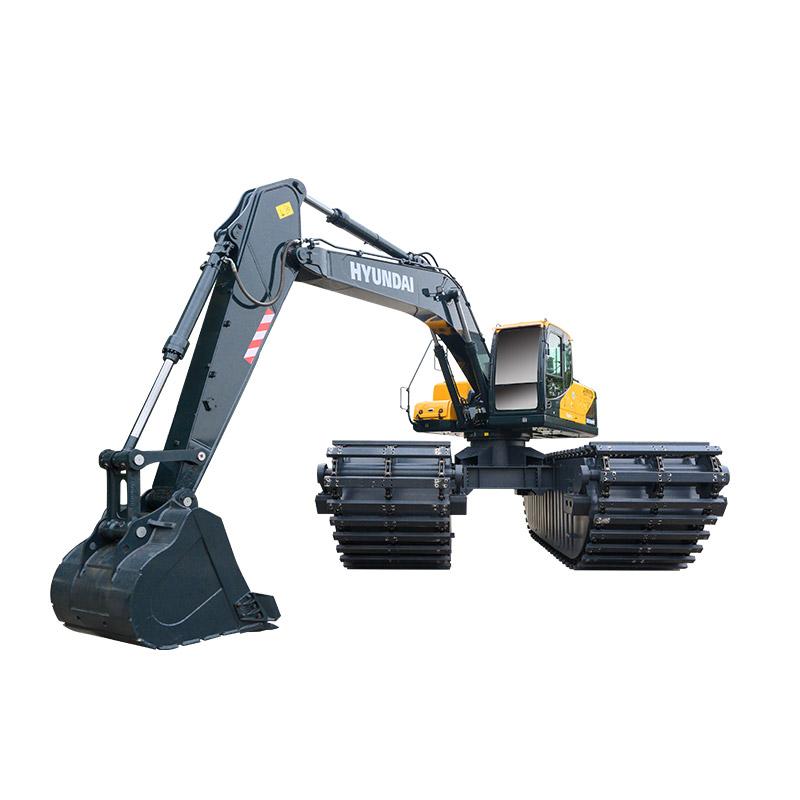
Standard excavators sink in wetlands, rivers, and soft terrain. The Hyundai amphibious excavator solves this problem with a specialized pontoon undercarriage. Choosing the right machine requires matching size to your project's unique conditions, not simply selecting the largest option. This guide explains how to evaluate terrain, compare real specifications, and avoid costly mistakes.
The amphibious excavator market is expanding rapidly. Industry forecasts project substantial growth through the next decade, reflecting rising demand for wetland construction and dredging work.
Metric | Value |
|---|---|
Market Size 2025 | USD 395.2 million |
Market Size 2035 | USD 839.5 million |
CAGR (2026-2035) | 7.7% |
Understanding these trends helps you plan equipment investments wisely.
Key Takeaways
Match the excavator size to your project's specific conditions, not just the largest option.
Evaluate terrain, water depth, and material density before choosing a model.
Pontoon size and shape determine flotation and stability in water.
Consider total ownership costs, including fuel, maintenance, and attachments.
Avoid common mistakes by analyzing site challenges and ensuring after-sales support.
Why Size Matters for Amphibious Excavators
Defining the Machine and Its Core Components
An excavator mounted on a pontoon undercarriage forms the core design. Key components include the engine, hydraulics, cab, boom, arm, bucket, and pontoons. Pontoons replace standard tracks to provide buoyancy and allow water operation. The excavator's size determines the pontoon dimensions. Larger machines need larger pontoons for sufficient flotation. Larger pontoons increase the footprint, while smaller pontoons enable access to confined areas. Engine power scales with size; larger excavators need more powerful engines. Hydraulic flow and boom/arm lengths also increase with size for greater digging capability.
The Hyundai amphibious excavator uses a heavy-duty undercarriage built for durability in harsh environments. As Hyundai's designated partner for special equipment modification with 20 years of modification expertise, Tianheng ensures every conversion meets factory-level quality. The machine's size directly influences the choice of components: a heavier machine needs a more powerful engine, which impacts fuel consumption and operational cost. Understanding these components helps buyers select the right size. Customization options — including adjustable pontoon width, length, and base plate height — optimize flotation for specific water depths. The modification process converts a standard crawler excavator into a swamp excavator while preserving the reliability of original Hyundai components.
How Size Impacts Stability and Performance
Size directly affects flotation, stability, and digging capacity. A larger machine provides greater stability in deep water. It can handle heavy materials like rock and clay. However, it requires more space to maneuver. A smaller machine is more agile. It works well in tight spaces like narrow canals. It also has a lighter footprint on soft ground. This prevents sinking. The center of gravity shifts with machine size. The pontoon design must counterbalance this shift. Wider pontoons increase stability but reduce access. Longer pontoons improve flotation but add weight. The right balance depends on the project.
The choice of size must match the project's terrain. For construction in wetlands, a medium-sized wetland dredging excavator often works best. It balances flotation and digging force. For deep river dredging, a larger machine is necessary. It provides the reach and power to remove heavy sediment. For narrow canal cleaning, a smaller machine is ideal. It fits in the confined space and causes less disturbance. Tianheng Construction Machinery offers customized solutions, adjusting pontoon size and configuration to ensure the machine meets specific project demands. Proper sizing prevents operation failures and maximizes return on investment.
Key Factors to Consider Before Choosing a Model
Analyzing Terrain, Water Depth, and Project Scope
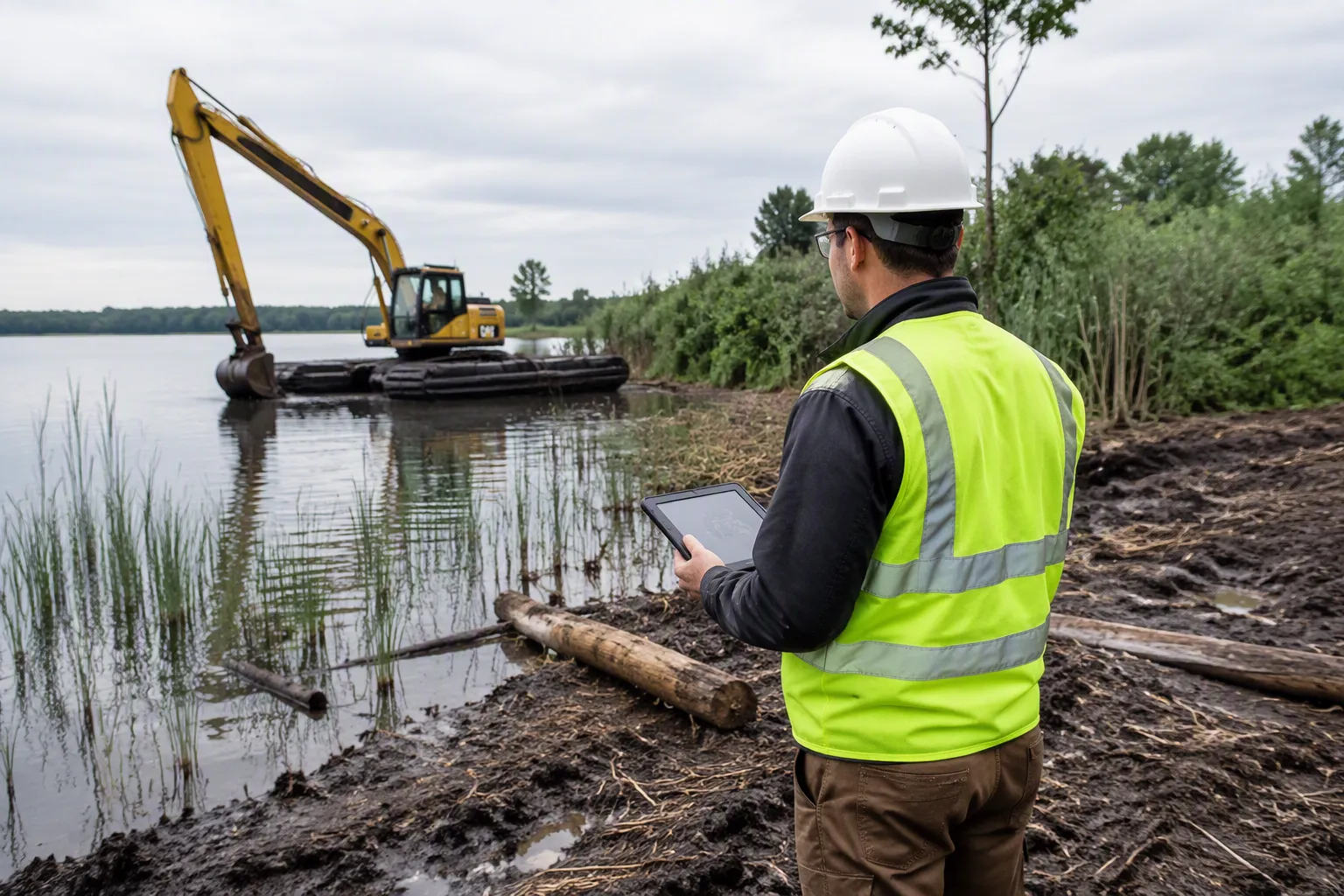
Site evaluation forms the foundation of any equipment decision. A machine that performs flawlessly in one location may fail completely in another. The correct selection of a pontoon excavator begins with a thorough assessment of the working environment. Four critical factors demand attention before any purchase conversation begins:
Water depth: Measure precisely across the entire work area. Deeper water may require supplementary side pontoons or spud anchors for stability. Shallow zones might limit access entirely.
Soil composition: Identify whether the bottom consists of soft silt, thick clay, or sandy material. Each type affects pontoon design and track selection differently.
Vegetation density: Evaluate reeds, roots, and submerged logs. Dense growth may necessitate specialized attachments like vegetation cutters before primary work starts.
Access limitations: Consider how equipment and supplies will reach the site. Narrow entry points restrict machine size regardless of project demands.
These factors cannot be considered in isolation. Terrain and water conditions must be assessed jointly with ground bearing conditions, required reach, working width, transportation logistics, and attachment requirements. A wetland restoration project with soft silt and shallow water demands a different machine than a river dredging operation with strong currents and deep channels. The scope of work determines whether you need a compact unit for precision canal cleaning or a heavy-duty model for large-scale excavation.
Consulting with experienced professionals simplifies this analysis. Tianheng Construction Machinery employs specialists who evaluate site conditions and recommend appropriate configurations. Their expertise helps buyers avoid costly mismatches between machine capability and actual working conditions.
Matching Excavator Capacity to Job Requirements
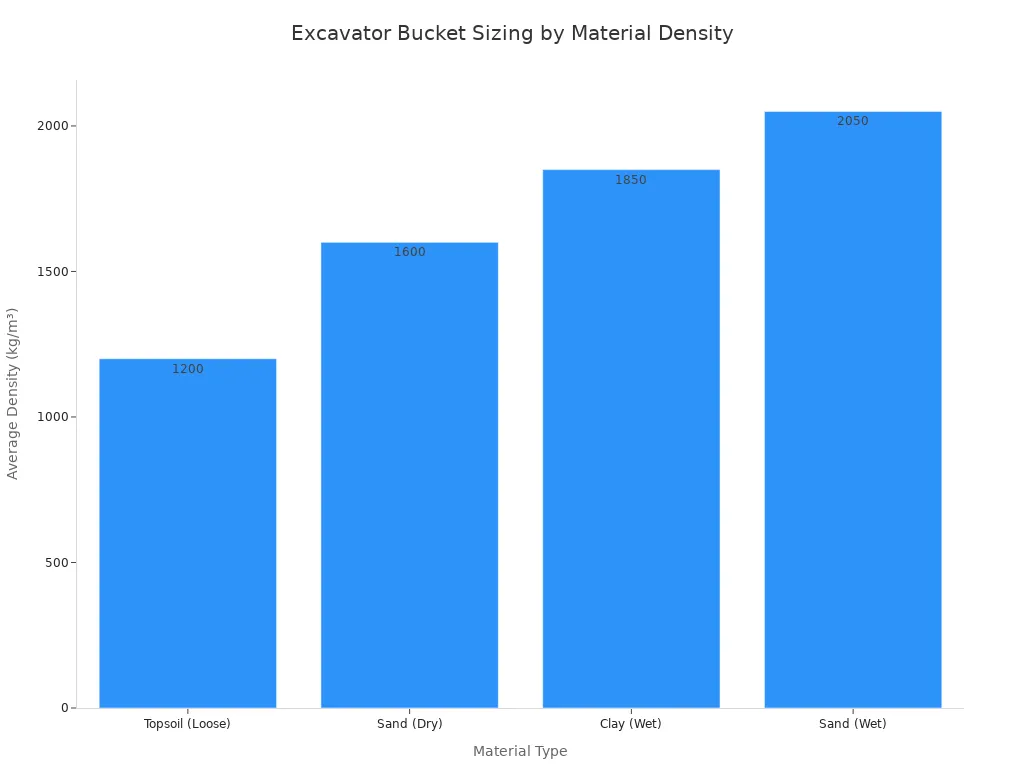
Once site conditions are understood, matching machine capacity to the workload becomes the next priority. Bucket size and digging force must align with the materials you will encounter. The table below shows how material density influences bucket selection:
Material Type | Average Density (kg/m³) | Recommended Bucket Sizing Adjustment |
|---|---|---|
Topsoil (Loose) | 1,200 | Standard GP bucket size is usually appropriate. |
Sand (Dry) | 1,600 | Consider a slight reduction from the machine's max capacity. |
Clay (Wet) | 1,850 | Reduce bucket size by 15–20% from standard. |
Sand (Wet) | 2,050 | Reduce bucket size by 20–25% from standard. |
Shale / Rock (Blasted) | 2,400+ | Use a smaller, purpose-built heavy-duty rock bucket. |
Dredging and canal cleaning introduce an additional complication: water weight. Saturated silt or clay can be 25–30% heavier than its dry version. This added mass demands a smaller bucket to remain within the excavator's safe working load. An oversized bucket on soft terrain risks tipping and reduces breakout force. Matching bucket size to material density is critical for both safety and operational efficiency.
For sensitive wetland jobs, pairing a grading bucket with a wide, flat cutting edge provides low ground pressure and the precision needed for channel maintenance. This combination works especially well with amphibious machines designed for minimal environmental disturbance. The right bucket choice also affects fuel consumption and cycle times, directly impacting project profitability.
Every construction project presents unique material challenges. A thorough analysis of soil samples and water conditions before equipment selection prevents downtime and expensive modifications later. Tianheng's team can analyze your material specifications and recommend appropriate bucket configurations, ensuring your Hyundai amphibious excavator performs at peak efficiency from the first day on site.
Key Specs to Evaluate for Optimal Performance
Engine Power, Hydraulic Flow, and Digging Force
Engine power determines how much work the machine can perform per unit of time. A more powerful engine drives larger hydraulic pumps and supports heavier attachments. For demanding tasks like river widening or deep dredging, higher horsepower translates directly into faster cycle times and greater productivity. As a reference point, the mid-range Hyundai HX220HD delivers 110 kW (approx. 148 HP) at 2,000 rpm, which suits most wetland and canal dredging projects.
Hydraulic flow controls the speed and precision of every movement. The pump type matters as much as the flow rate. Gear pumps offer lower initial cost but struggle under high pressure. Piston pumps handle heavy loads efficiently and provide variable flow for precise control. This variable flow proves essential when the machine must navigate and work simultaneously. The table below summarizes the key differences:
Selection Factor | Gear Pump Suitability | Piston Pump Suitability |
|---|---|---|
Pressure Requirements | Low to medium pressure | High pressure, heavy duty |
Flow & Speed Needs | Fixed constant flow | Variable flow for precise control |
Operational Efficiency | Less efficient at high pressure | Highly efficient, converts more engine power |
Cost & Complexity | Lower initial cost, simpler | Higher cost, more complex |
Durability & Environment | Susceptible to contamination wear | Robust, better sealed |
Digging force combines hydraulic pressure with boom and arm geometry. This specification determines how easily the bucket penetrates compacted soil or lifts saturated sediment. A machine with strong digging force completes dredging operations faster and handles tougher materials without strain.
Operating Weight, Reach, and Lifting Capacity
Operating weight directly affects flotation. A heavier excavator requires larger or additional pontoons to maintain buoyancy. This relationship forces buyers to balance power against the machine's footprint on soft ground. In many cases, ground pressure is a more important selection criterion than horsepower or reach.
Reach affects stability in a critical way. Boom extension shifts the center of gravity outward, increasing the risk of tilting. Dynamic forces during operation must be balanced to avoid instability. A longer reach allows access to distant material but demands careful stability management, especially in waterlogged conditions.
Lifting capacity ties these factors together. It represents the maximum load the machine can handle at a given reach. For canal cleaning, a moderate reach with high lifting capacity often outperforms a longer boom with less strength. Hyundai's partnership with Tianheng ensures every machine meets high standards with genuine parts and reliable performance, so the specifications you select translate into dependable operation on your construction site.
Pontoon Design and Stability
The pontoon undercarriage forms the most critical component for water operation. Its size and shape determine the machine's buoyancy and stability in rough water. The design must account for water density, machine weight, and operational loads.
How Pontoon Size and Shape Affect Flotation
An amphibious excavator's pontoon dimensions directly determine the buoyant force available. The relationship follows the principle of displacement: a pontoon must displace a volume of water equal to the total machine weight plus a safety margin. The following table shows the key parameters that govern this calculation:
Parameter | Formula / Example |
|---|---|
Pontoon Volume (m³) | Length × Width × Height × 0.65 (hull coefficient) |
Buoyancy Required (kg) | Machine Weight × Safety Factor |
Displaced Volume (m³) | Buoyancy Required ÷ Water Density |
Water Density Effect | Freshwater = 1000 kg/m³; Saltwater = 1025 kg/m³ |
A practical example illustrates these calculations. Tianheng's R215/225-series main pontoons measure 8,000 × 1,500 × 1,800 mm each. The pair displaces roughly 43 m³ of freshwater — about 43,000 kg of buoyant force — comfortably supporting a 21.42-ton Hyundai HX220HD plus the pontoon frame itself. Adding the optional side pontoons (7,000 × 1,250 × 1,000 mm each) further raises reserve buoyancy and lateral stability for deeper, softer conditions.
These principles apply directly to excavator size selection. The machine's operating weight, reach, and digging force all influence the required pontoon size. A larger excavator needs larger pontoons for sufficient flotation. The shape also matters. Wider pontoons improve stability but reduce access in narrow channels. Longer pontoons increase buoyancy but add weight. The correct balance ensures the machine remains stable during dredging operations.
Material and Durability for Harsh Environments
Pontoon construction must withstand constant exposure to water, debris, and impact. Tianheng's floating tanks are built from high-strength manganese steel plate (Q345B), chosen for high impact resistance, durability, and excellent welding performance. The chain rail plates use Q785 high-strength board, while the chains are made of 40Cr high-strength wear-resistant material with a trapezoidal low-alloy steel plate design.
Corrosion protection is equally critical in aquatic environments. Every pontoon receives shot-blasting surface treatment and marine-ship special paint, with double-sided and double-bottom coating for anti-rust capability that also protects resale value. Wear-resistant strips are added to the chain track to shield it from abrasion, and fully enclosed travel motors protect critical drive components from water ingress.
Tianheng Construction Machinery offers heavy-duty amphibious undercarriages with a lightweight design, and the height of the base plate can be customized to meet various working condition requirements. Their collaboration with Hyundai ensures every machine meets high standards for material quality and structural integrity.
Comparing Hyundai Amphibious Excavator Models
Overview of the Hyundai Lineup and Custom Options
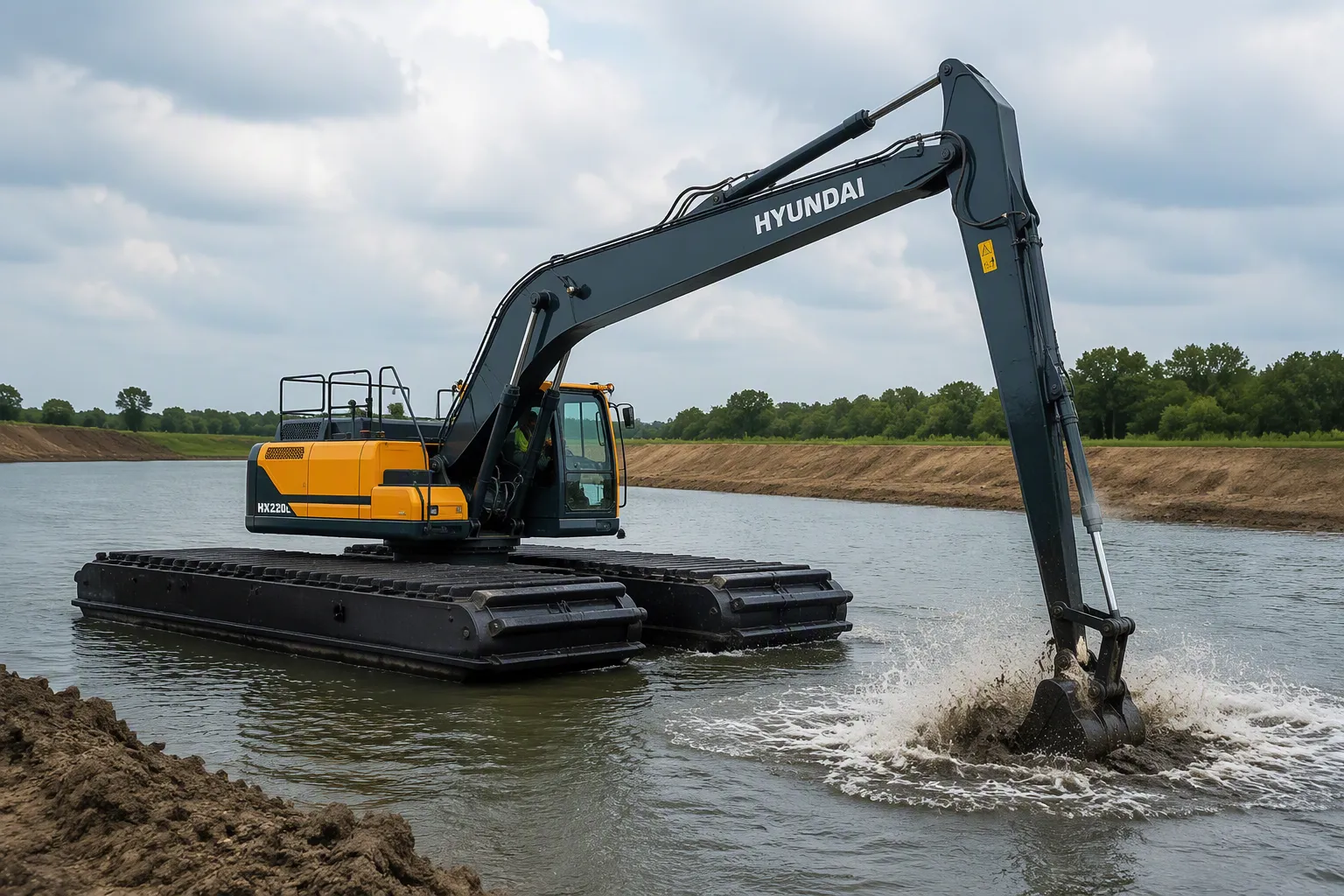
Hyundai offers a range of crawler base excavators suitable for amphibious conversion. The lineup spans from compact units for narrow canals to heavy-duty machines for large-scale dredging. Each base model provides a reliable foundation with proven Hyundai engineering. Tianheng Construction Machinery serves as the exclusive modification partner for Hyundai special equipment, allowing buyers to start with a quality Hyundai base and transform it into a specialized amphibious machine.
The customization process addresses specific site challenges. Standard excavators lack the flotation and reach needed for wet environments. Tianheng solves this by modifying the undercarriage and boom. The HX220L model demonstrates this capability clearly.
Can the HX220L be modified for amphibious or dredging work?
Yes. As Hyundai's designated partner for special equipment modification, Tianheng can equip the HX220L with custom amphibious pontoons and long-reach booms, transforming it into a highly efficient Hyundai amphibious excavator for waterway dredging.
This modification capability extends to other models across the lineup. Buyers are not limited to standard configurations. Each machine can be tailored to match the exact demands of the job site. The modification process preserves the original Hyundai components while adding specialized features. This approach combines proven reliability with targeted customization.
The customization solves two common problems in wet environments.
Problem: Insufficient Reach for Deep Excavation and Soft Terrain. The standard boom and arm are not optimized for river dredging or swampy ground where standard tracks sink and stall.
Tianheng Solution: With two decades of modification expertise, Tianheng builds extended telescopic booms for deep subway and port work, and amphibious pontoon undercarriages that let the machine operate safely in water and soft mud.
Side-by-Side Comparison of Key Specifications
The following table compares three representative size classes built on genuine Hyundai crawler bases, paired with Tianheng's amphibious floating tank series. All pontoon configurations accept customization.
Specification | Compact Class | Mid-Range Class | Heavy-Duty Class |
|---|---|---|---|
Base Model Example | Hyundai HX80 | Hyundai HX220HD / HX220L | Hyundai HX300 / HX340HD |
Base Operating Weight | 7.34 ton | 21.42 ton | 30 – 33 ton |
Engine Power | 36.2 kW / 2200 rpm | 110 kW / 2000 rpm | 194 kW / 2200 rpm |
Main Pontoon Size (per side) | 5700 × 1000 × 1300 mm | 8000 × 1500 × 1800 mm | 8500 × 1600 × 1900 mm |
Overall Machine Width | 3000 mm | 4500 mm | 4800 mm |
Optional Side Pontoons | 5500 × 900 × 700 mm (1.4 T each) | 7000 × 1250 × 1000 mm (3.0 T each) | 7500 × 1250 × 1100 mm (3.2 T each) |
Typical Applications | Narrow canals, ponds, urban waterway maintenance | River dredging, wetland restoration, lake management | Deep channel dredging, coastal & large-scale wetland projects |
For logistics planning, a reference mid-range amphibious configuration (R225LVS class) measures approximately 10,710 mm in shipping length, 4,500 mm in overall width, and 3,940 mm in overall height, with a pontoon grounding length of 4,300 mm. Because pontoons are typically shipped disassembled, Tianheng coordinates containerized or flat-rack transport and provides on-site assembly guidance for overseas buyers.
The right choice depends entirely on the project's specific requirements. A compact machine excels in confined canal cleaning where access is limited. A mid-range model handles most wetland construction tasks with a good balance of power and flotation. A heavy-duty unit delivers the power needed for major river widening projects and deep dredging operations. Buyers should match the machine class to the terrain, water depth, and material density they will encounter. Consulting with Tianheng's specialists ensures the selected model meets the demands of the job and helps buyers avoid costly mistakes.
Cost Considerations and ROI Analysis
Initial Purchase Price vs. Long-Term Operational Costs
The upfront price of an amphibious excavator represents only a fraction of its true cost. Fuel consumption, routine maintenance, and eventual resale value shape the total cost of ownership. A larger machine demands a higher initial investment. It also burns more fuel per hour. However, for large-scale dredging or river widening, that extra power translates into faster cycle times and fewer working days on site. The efficiency gain often offsets the higher purchase price.
Smaller machines offer lower operating costs. They consume less fuel and require smaller replacement parts. For light canal cleaning or wetland maintenance, a compact unit delivers adequate performance at a fraction of the operational expense. Buyers must weigh these trade-offs carefully. The right choice depends on project duration and material volume. A machine that sits idle for weeks between tasks does not justify premium fuel consumption. A machine that works daily in heavy material justifies every dollar of its higher price tag.
Maintenance schedules also differ by size class. Heavy-duty models use larger filters, more hydraulic fluid, and heavier undercarriage components. These parts cost more to replace. Yet they also last longer under demanding conditions. Resale value follows a similar pattern — and amphibious machines with well-maintained, marine-painted pontoons retain value especially well. Larger, well-maintained machines retain value better in markets with ongoing infrastructure demand.
The Value of Versatility and Attachments
A single amphibious excavator can perform multiple roles when equipped with the right attachments. This versatility directly improves return on investment. Consider the impact of a rotating grapple on sorting operations:
Scenario | Without Rotating Grapple | With Rotating Grapple |
|---|---|---|
Machine Movement | Constant repositioning to get the right angle | Operator stays put; uses 360-degree rotation |
Fuel Consumption | High (baseline) | Reduced by up to 25% |
Sorting Speed | Slow, fuel-guzzling process | Sorting times cut by more than half |
Project Timeline | A job eats up an entire day | Knocked out in just a few hours |
ROI Impact | High operating costs | Lower fuel costs, faster cycle times, higher productivity, and expanded capabilities |
The numbers tell a clear story. A single attachment transforms the machine's productivity profile.
Marsh excavators accept a wide range of specialized tools:
Jetting equipment for pipeline installation in soft terrain
Dredging buckets for sediment removal in canals and rivers
Tree cutters for vegetation management in wetlands
These attachments expand the application range. One machine handles pipeline work, salvage dredging, and shoreline cleanup. Direct access to otherwise unreachable sites reduces project timelines. Every construction project benefits from this flexibility. The ability to switch tools without changing machines keeps the excavator productive across diverse tasks. For contractors managing multiple construction projects, this adaptability delivers measurable financial returns.
Common Mistakes to Avoid When Selecting Your Excavator
Overlooking Site-Specific Challenges
Buyers often choose a machine based on price or brand reputation. This approach ignores the unique conditions of each project site. A machine that performs well in one wetland may fail completely in another. Terrain analysis must come before any purchase decision. Water depth, soil composition, and vegetation density all affect machine performance. Ignoring these factors leads to equipment that cannot complete the job.
The table below outlines frequent errors and their solutions:
Common Mistake | Prevention Strategy |
|---|---|
Choosing equipment without analyzing terrain | Analyze terrain before selection |
Prioritizing cost over quality | Balance cost with long-term quality |
Ignoring maintenance requirements | Review maintenance needs upfront |
Overlooking attachment compatibility | Verify attachment compatibility with project needs |
Buyers also underestimate capacity requirements. A machine with insufficient digging force struggles with dense clay or saturated sediment. This mistake slows project timelines and increases fuel consumption. Evaluating all important features, not just initial cost, helps buyers make better decisions and avoid higher expenses later. Environmental regulations add another layer of complexity. Wetland projects often require permits that limit ground disturbance. A machine with excessive ground pressure may violate these restrictions. Site-specific challenges demand careful evaluation before signing any contract.
Underestimating the Importance of After-Sales Support
Specialized equipment requires specialized support. The amphibious version of a standard model demands more attention than its conventional counterpart. The table below compares the support needs of two similar machines:
Aspect | Hyundai HX220 Amphibious (Tianheng-Modified) | Hyundai HX220HD (Standard Crawler) |
|---|---|---|
Technical Support | Modification drawings, pontoon maintenance manuals & troubleshooting guides from Tianheng | Standard maintenance documentation |
Maintenance Complexity | Higher (pontoon seals, enclosed travel motors & specialized parts) | Lower (standard parts) |
Procurement Cost | Higher (base machine + custom undercarriage) | Lower |
Key Risk | Underestimating maintenance complexity, neglecting technical documentation, ignoring after-sales support | Limited versatility |
Buyers of amphibious conversions should bundle technical support and maintenance packages to minimize downtime. Ignoring after-sales support is a common mistake for this specialized model. A supplier with a strong service network prevents costly delays. Genuine parts availability directly affects machine uptime. A dealer with extensive inventory reduces waiting periods for critical components.
For 15 consecutive years, Tianheng has ranked as Hyundai's top seller and Diamond-level Dealer in Service & Parts, maintaining a USD 5 million inventory of genuine Hyundai parts across 50 direct-operated branches — providing strong support for your engineering construction.
Buyers should expect several services from their supplier. Spare parts availability ensures ongoing maintenance runs smoothly. International warranty coverage protects against manufacturing defects across regions. Training programs for operators and technicians promote safe, efficient use. A direct channel for service requests simplifies troubleshooting. A global distribution network of dealers ensures local access to support personnel. Qualified engineers and customer service staff handle technical issues promptly. These purchase considerations matter as much as the machine itself. A reliable partner keeps your excavator productive throughout its working life. Choose a supplier committed to dependable post-purchase service.
The right Hyundai amphibious excavator matches your project's unique demands, not the largest option available. Assess terrain first, define workload, compare specifications, then calculate total ownership costs. These steps prevent expensive mismatches.
Partnering with Tianheng Construction Machinery — Hyundai's designated amphibious excavator modification partner — delivers customized solutions and exceptional support. Their specialists analyze site conditions and recommend configurations that maximize performance.
Contact Tianheng at sale@th-mach.com or 0086-18951208765 for a consultation today. Request a demo, a pontoon dimensional drawing, or a personalized configuration proposal. Expert guidance remains the final step toward a confident purchase. Every construction investment deserves this level of diligence.
FAQ
How do I determine the right size for my project?
Start with a thorough site assessment. Measure water depth, identify soil composition, and evaluate access limitations. Match the machine's operating weight and pontoon dimensions to those conditions. A compact unit suits narrow canals. A heavy-duty model handles deep dredging. Consult with Tianheng specialists for a precise recommendation.
What makes the pontoon undercarriage different from standard tracks?
Pontoons provide buoyancy through water displacement. They keep the machine afloat in wetlands and rivers. Standard tracks sink in soft terrain. The pontoon size and shape determine stability. Wider pontoons improve balance. Longer pontoons increase flotation. Tianheng's pontoons use high-strength manganese steel plate (Q345B) with marine-ship special paint and wear-resistant chain track strips to resist corrosion and impact damage in harsh aquatic environments.
Can a standard Hyundai excavator be converted to amphibious operation?
Yes. Tianheng Construction Machinery serves as Hyundai's exclusive modification partner and has successfully modified the world's first Hyundai special equipment, including amphibious excavators. They transform standard models like the HX220L into amphibious machines. The process adds custom pontoons and may extend the boom for dredging work. Original Hyundai components remain intact, preserving reliability while adding specialized capabilities.
Can the pontoon undercarriage be customized for my project?
Yes. All Tianheng amphibious configurations accept customization. The height of the base plate can be customized for different working conditions, the overall design is lightweight for better flotation, and optional side pontoons can be added for extra stability in deeper water. Pontoon series are matched to the base machine class, from the HX75 series up to the R245/R275/305 heavy-duty series.
What maintenance does an amphibious excavator require?
Routine checks focus on the pontoon compartments for water ingress. Inspect seals and travel motors regularly. Flush hydraulic systems after saltwater use. Genuine Hyundai parts extend machine life. Tianheng maintains a USD 5 million genuine parts inventory across 50 direct-operated branches, ensuring swift replacement delivery. Proper maintenance prevents costly downtime on remote job sites.
How does water depth affect excavator stability?
Deeper water increases the risk of tipping. The machine's center of gravity shifts during operation. Longer booms extend reach but reduce stability. Pontoon displacement must exceed total machine weight plus a safety margin. For deep water work, larger pontoons or optional side pontoons and spud anchors provide additional support. Always verify stability calculations before deployment.


