


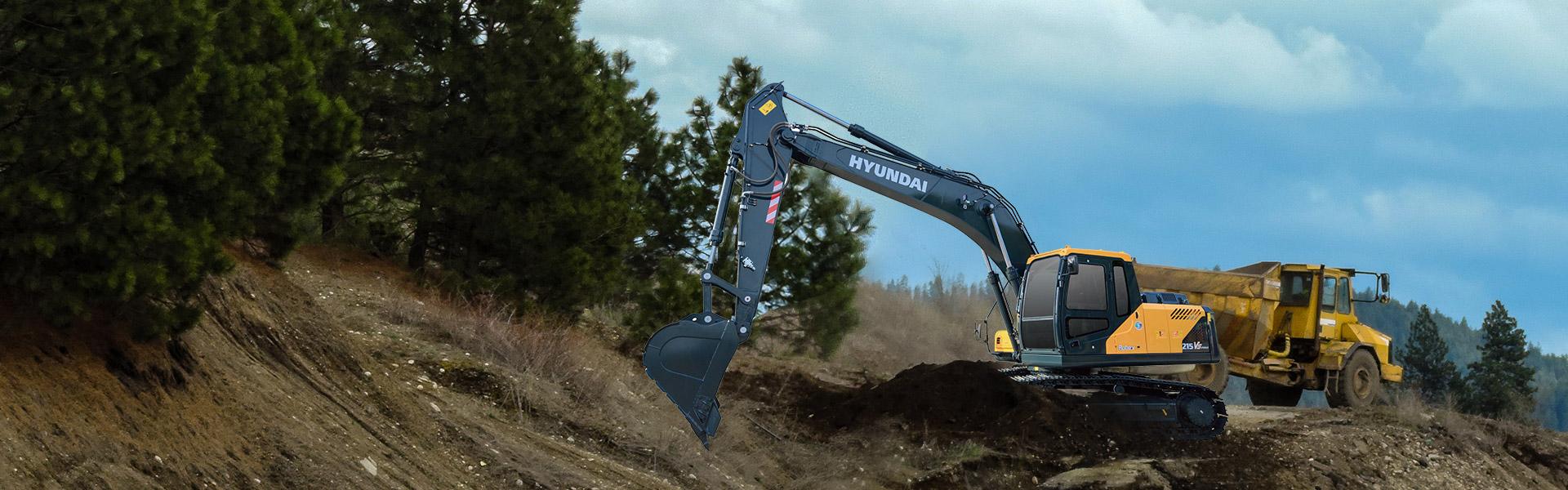
HX305L vs HX375L: 31.7 or 37.8 Ton for Quarry and Bulk Earthwork
 Nov 16, 2026|
 View:102
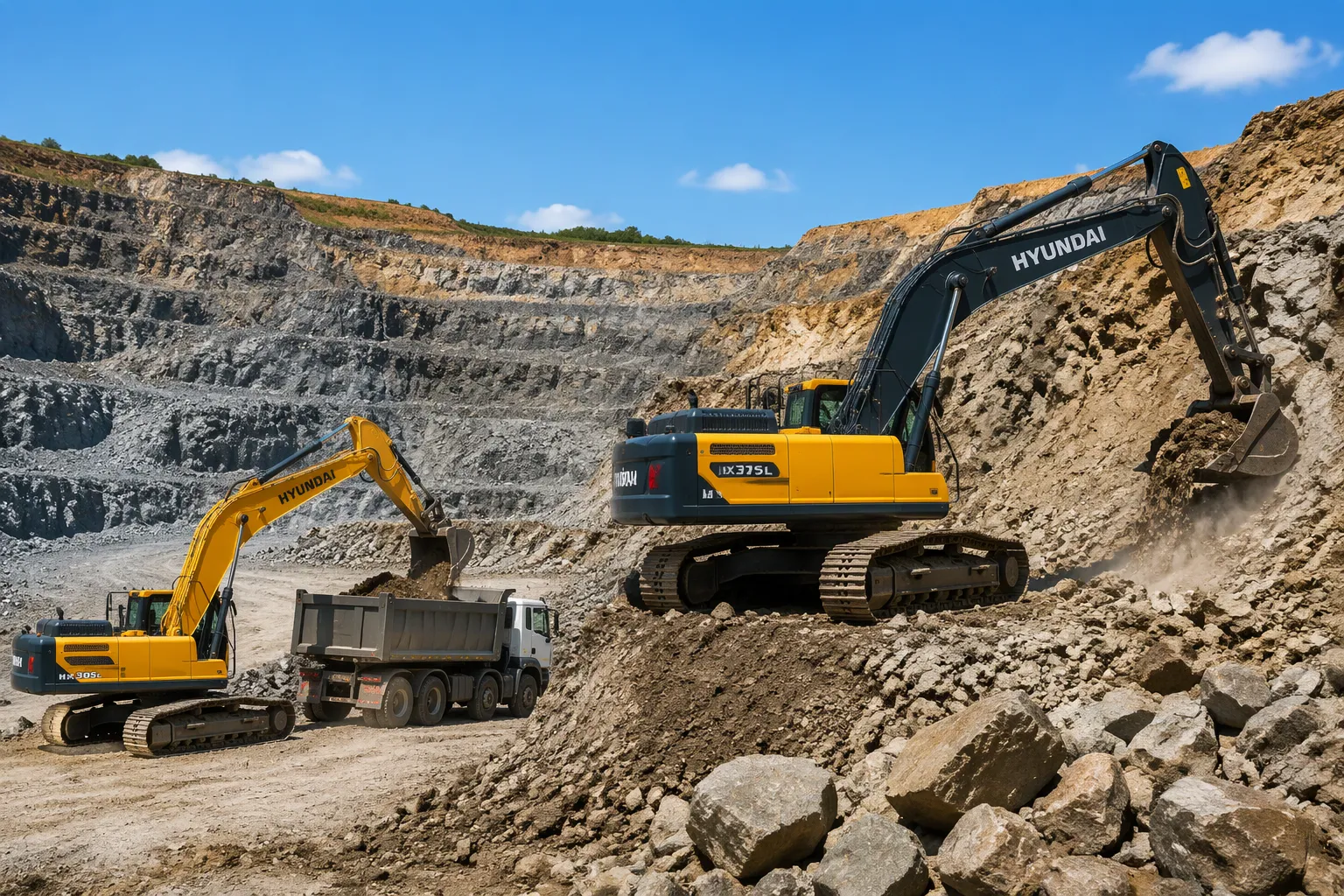
For sustained hard-rock quarry loading, take the 37.8-ton HX375L. For mixed duty, deep excavation, or a site where the machine must move, take the 31.7-ton HX305L. That split is not about which machine is bigger. It comes down to four published figures: 19 t versus 14 t of arm digging force, 6,940 mm versus 7,305 mm of maximum digging depth, 7,620 mm versus 7,175 mm of dump height, and 6.1 t of operating weight you have to move each time. This HX305L vs HX375L comparison works through those numbers, then turns them into a choice for your truck fleet and your shift pattern.
Key Takeaways
Arm digging force is 19 t on the HX375L against 14 t on the HX305L, a 36% gap that decides hard-rock loading.
The HX375L dumps at 7,620 mm and the HX305L at 7,175 mm, so the larger machine sets the truck class it can serve.
The HX305L digs to 7,305 mm against 6,940 mm on the HX375L, because its arm is 3.05 m against 2.8 m.
The 6.1 t weight gap changes axle load and permit work, not the class of trailer itself.
HX305L vs HX375L: Quick Answer
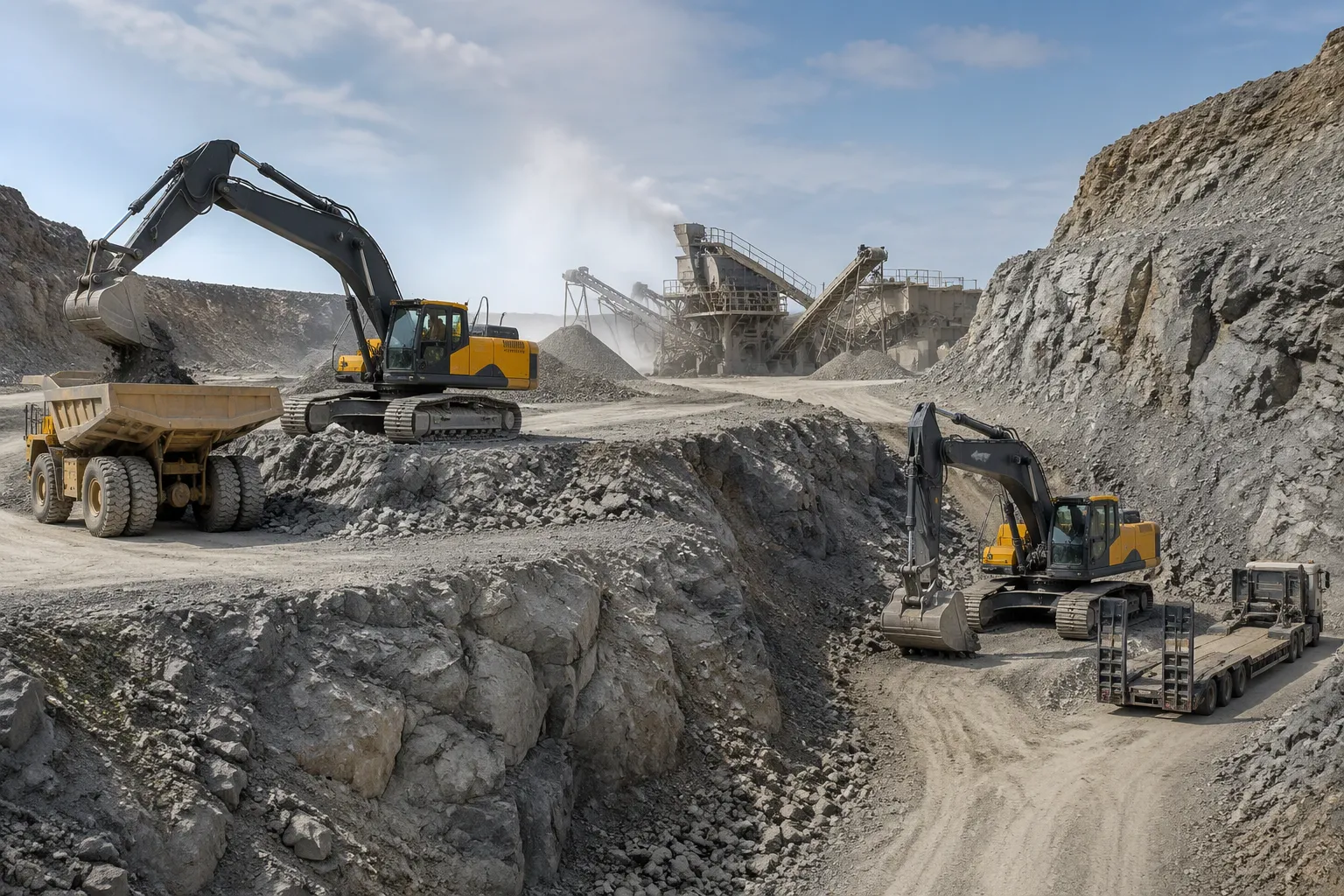
The 37.8 ton excavator is the machine for a face that runs two shifts and feeds a primary crusher on a fixed schedule. The 31.7 ton excavator is the machine for a spread where the same unit loads rock in the morning and benches or trenches in the afternoon, or where the haul road and the trailer decide what can reach site. Everything after this section is the reasoning behind those two sentences.
HX375L for high-volume quarry faces
A hard-rock face punishes a machine in one specific way: the bucket has to break the material before it can fill. The HX375L brings 23 t of bucket digging force and 19 t of arm digging force to that job, against 19.5 t and 14 t on the HX305L. The 36% arm force advantage is the number that matters when teeth meet shot rock, because arm force is what pulls the bucket through a tight, broken face rather than stalling half full.
Behind the attachment sits a Cummins L9 rated 254 kW at 1,900 rpm with 1,520 N·m of torque held from 1,100 to 1,400 rpm. That low, wide torque band keeps the engine pulling through the dig instead of waiting to be revved into a narrow window, and it feeds main pumps rated 2 × 333 L/min. The HX305L runs a Cummins B7 at 173 kW, 949 N·m and 2 × 285 L/min, which is a 47% power gap and a 60% torque gap. Those figures are the engineering basis for the production difference, and they are the reason a two-shift crusher feed line gravitates to the larger machine.
HX305L for mixed duty and tight access
The 31.7 ton excavator carries a 6.25 m heavy-duty boom with a 3.05 m standard arm, which is a longer arm than the HX375L uses. The practical result is counter-intuitive and worth stating plainly: the smaller machine digs deeper. Maximum digging depth is 7,305 mm on the HX305L against 6,940 mm on the HX375L, a 365 mm advantage that decides trench, footing and deep-bench work.
Tail swing radius tells the same story in plan view. The HX305L swings its counterweight within 3,210 mm, and the HX375L needs 3,620 mm. On a single-lane closure, a benched face against a highwall, or a yard with a fixed stockpile line, those 410 mm are the difference between working and repositioning. Neither machine is a zero-tail-swing design, so plan the swing area for both, and give the smaller one the tighter spot.
Choose HX305L When
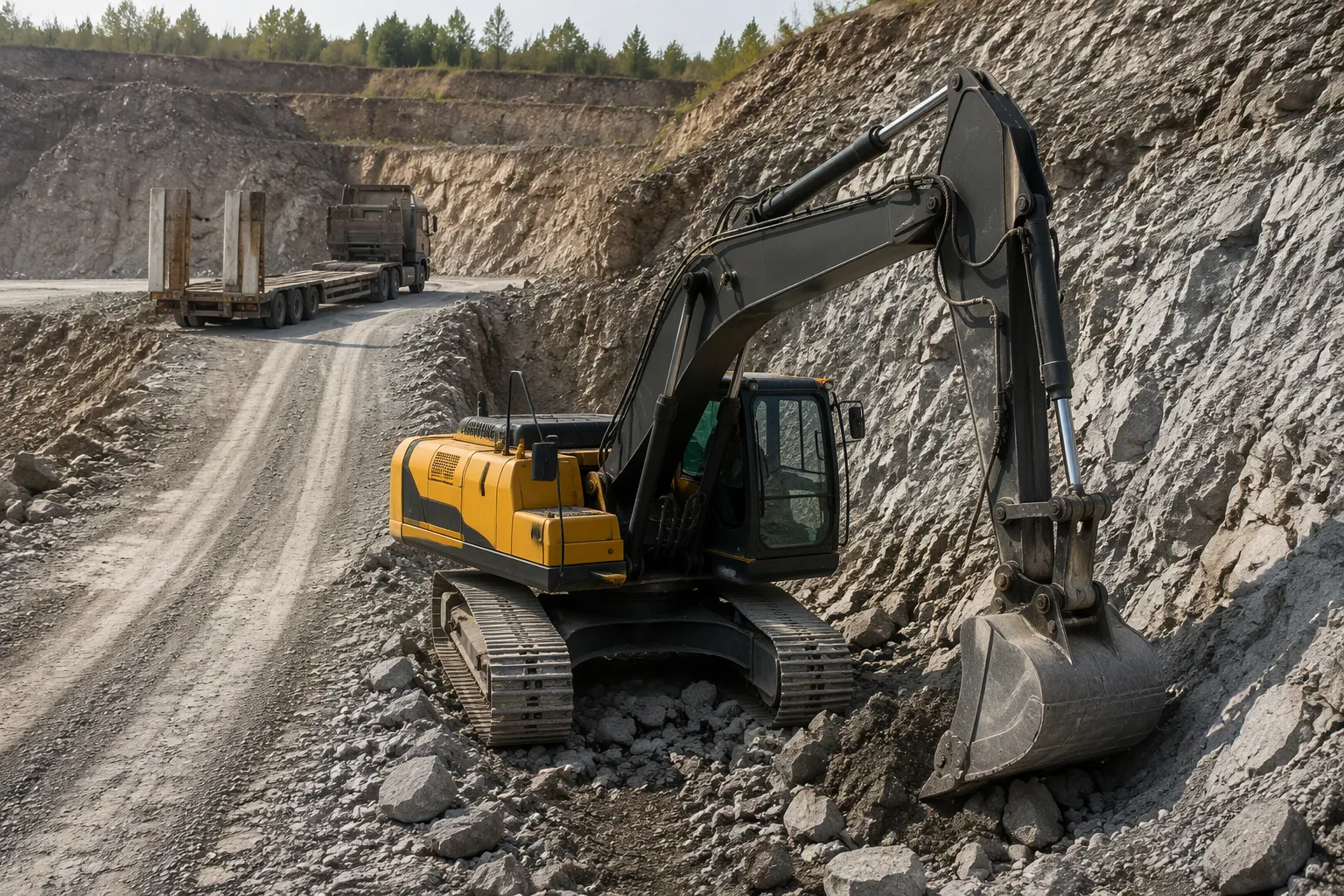
Transport, tail swing and site access
The 6.1 t gap between these machines is real, and it is easy to overstate what it buys. In most jurisdictions 31.7 t and 37.8 t land in the same low-bed trailer class, so the trailer itself rarely changes. What changes is axle load, permit conditions, and the number of routes where the heavier load needs an escort or a route survey. Treat mobilization as a cost per move, not a fixed saving: a single-site quarry pays it once, and a contractor moving between pits every few weeks pays it on every job.
Site geometry is the harder constraint. A 31.7 ton excavator fits narrower benches, works closer to a highwall, and repositions between faces faster. If the plan requires the unit to travel on its own tracks between work areas rather than on a trailer, that agility is worth more than the output it gives up. Check the tail swing envelope against the actual bench width before you sign, because a machine that cannot swing is not a machine you can use.
Cost and wear on moderate duty
On a duty cycle the plant already paces, the smaller machine is the cheaper one to run. The B7 displaces less than the L9, so hourly fuel burn is lower under comparable load, and the 490 L tank against 585 L on the HX375L reflects the same sizing logic. Lower breakout force also loads the undercarriage, bucket teeth and cutting edges less, which stretches replacement intervals.
The honest caveat is that cost per hour is not the buying metric. Cost per ton moved is. On a site where the crusher, not the excavator, sets the pace, the HX305L keeps up at a lower hourly cost and the arithmetic works in its favor. On a site where the excavator sets the pace, the same arithmetic flips, because fewer passes per truck is what pays. Working through the full ownership cost before you compare purchase prices is the only way to settle it.
Choose HX375L When
Bucket, breakout force and dump height
The 37.8 ton excavator is specified as a loading tool, and its geometry shows it. It carries a 6.5 m heavy-duty boom with a 2.8 m standard arm and a 1.9 m³ heavy-duty bucket, so the short arm trades digging depth for bucket size and lifting authority. Maximum dump height is 7,620 mm, 445 mm above the HX305L, which is what lets it clear the side of a larger tipper body without crowding the truck.
Bucket capacity is the other half of that decision. A 1.9 m³ bucket against 1.63 m³ on the HX305L moves 16.6% more material per pass, and fewer passes per truck is the mechanism that shortens the loading cycle. The 23 t bucket force and 19 t arm force are what keep those passes full in broken rock instead of skidding off the face. Full specifications for the machine sit on the HX375L crawler excavator product page.
Fleet and shift pattern
Pass matching decides whether the larger machine pays for itself. A 1.9 m³ bucket wants trucks that can absorb it, wide benches to swing in, and a dozer keeping the floor clean. Pair it with undersized trucks and the operator fills each body in two passes then waits, which is the most expensive way to own a 37.8 ton excavator.
Shift pattern matters as much. Two shifts a day, six days a week, is the pattern this machine is built for, and the reserve capacity is what holds production through the back half of a long shift. A single-shift operation with a moderate target rarely recovers the capital the larger machine ties up. Read the HX375L specifications and duty matching notes if you need the engine, hydraulic and undercarriage detail behind this summary.
Support equipment follows the same rule. A 1.9 m³ bucket wants wide, clean benches, so budget a dozer on the floor and water control along the loadout lane. Operator experience is not a soft factor at this weight either, because the reserve capacity of the HX375L only shows up in hands that can time a swing and a spot. An undersized crew on a 37.8 ton machine returns less per shift than a well-run HX305L, which is the most common way a well-specified machine becomes a poor purchase.
HX305L vs HX375L: Specification Comparison
The table collects the published figures for both machines. Ratings are configuration dependent, and regional spec sheets differ, so confirm the values against the official documentation for your market before a purchase order.
Specification | HX305L | HX375L |
|---|---|---|
Operating weight | 31.7 t (31,700 kg) | 37.8 t (37,800 kg) |
Engine | Cummins B7 | Cummins L9 |
Rated power | 173 kW at 2,000 rpm | 254 kW at 1,900 rpm |
Maximum torque | 949 N·m at 1,200 rpm | 1,520 N·m at 1,100–1,400 rpm |
Main pump flow | 2 × 285 L/min, EPIC | 2 × 333 L/min, EPIC |
Bucket capacity | 1.63 m³ heavy-duty (1.44 m³ alternative) | 1.9 m³ heavy-duty |
Boom and arm | 6.25 m heavy-duty boom, 3.05 m standard arm | 6.5 m heavy-duty boom, 2.8 m standard arm |
Bucket digging force | 19.5 t (21.2 t boost, ISO) | 23 t (ISO) |
Arm digging force | 14.0 t (15.2 t boost, ISO) | 19 t (ISO) |
Maximum digging depth | 7,305 mm | 6,940 mm |
Maximum dump height | 7,175 mm | 7,620 mm |
Tail swing radius | 3,210 mm | 3,620 mm |
Fuel tank | 490 L | 585 L |
Travel speed | 5.6 / 3.2 km/h | 5.12 / 3.21 km/h |
Emission control | Tier 4, DOC + DPF + SCR, no EGR | Tier 4, DOC + DPF + SCR, no EGR |
The three figures that decide it
Read the table in this order. First, arm digging force, because it decides whether the bucket fills in broken rock. Second, maximum dump height, because it decides which trucks the machine can serve without repositioning. Third, tail swing radius, because it decides which benches and closures the machine can work in at all.
The rest of the table explains why those three land where they do. The 254 kW and 1,520 N·m figures produce the digging force, the 6.5 m boom and 2.8 m arm set the depth and dump height trade-off, and the 600 mm triple grouser shoes on the heavier machine spread 6.1 t more weight over the same ground. All percentages in this article are calculated from the two published spec sheets, not measured on a test bed.
Choose by Duty and Truck Fleet
Most buying mistakes come from comparing tonnage instead of comparing the machine to the haul cycle. The five patterns below cover the situations these two models actually meet in the field.
Duty | Fit | Reason |
|---|---|---|
Hard-rock face feeding a primary crusher, two shifts | HX375L | 19 t arm force, 1.9 m³ bucket, 7,620 mm dump height |
One unit loading, benching and trenching in a shift | HX305L | 7,305 mm digging depth and 3,210 mm tail swing |
Pit that relocates between sites each season | HX305L | 6.1 t less per move, fewer route restrictions |
Fleet built around 40 t class dump trucks | HX375L | 1.9 m³ bucket and higher dump height shorten each load |
Utility, road and footing work with 20–25 t tippers | HX305L | 1.63 m³ bucket matches the smaller body, deeper reach for footings |
Two rules sit behind that table. Set the daily tonnage target first, then check whether the haul fleet can absorb the bucket you are buying. A machine that fills a truck in one pass and then waits is not producing more than a machine that fills it steadily. Read the HX305L specs and duty matching notes for the same reasoning applied to the smaller machine on its own.
Emission and Export Configuration
Both models ship with a Tier 4 package: DOC + DPF + SCR after-treatment with the EGR circuit deleted, matching the China Stage IV specification sold in the domestic market. That is a genuine constraint, not a formality. A Tier 4 machine needs low-sulfur diesel, low-ash engine oil and a defined urea supply, and the DPF ash it collects cannot be burned off in service. The rules behind those fuel and oil limits are set out by the US environmental regulator for transport emissions.
Confirm the tier your market can register before you order, because the answer decides the model, not just the paperwork. Markets that require Stage V need a different build, and markets still on Stage II or Stage III are usually better served by the T2 models in the range. Site safety duties around excavation and benching, which matter as soon as the machine starts working a face, are covered in the trenching and excavation safety guidance published by the US labor safety authority.
Common Mistakes to Avoid
Buying on tonnage alone is the first. Operating weight says nothing about how fast a machine fills a specific truck body, and the 6.1 t gap between these two models is smaller than the gap between a matched and a mismatched fleet. Time a full loading cycle on your own trucks before you compare spec sheets.
Treating mobilization as free is the second. Add trailer capacity, route survey, permit fees and escort requirements where they apply, then divide by the number of moves you expect per year. A machine that costs more to move than it earns between moves is the wrong machine, whatever the tonnage.
The decision rule is short. Hard rock, two shifts and a crusher to feed: HX375L. Deep digging, tight swing, or a machine that has to move: HX305L. Check your daily tonnage target, your truck bodies and your transport route against the table above, and the answer usually settles itself. Jiangsu Tianhengweiye has supplied and supported Hyundai construction equipment since 1999, holds diamond-level status for service and parts, and keeps a parts inventory of about USD 5 million across 50 branches, so configuration and after-sales questions can be answered before you commit.
Get a Quote for HX305L or HX375L
FAQ
HX305L vs HX375L: which one should a quarry buy first?
Buy the HX375L if the machine will spend its hours at a hard-rock face feeding a crusher on a fixed schedule. Buy the HX305L if one machine has to cover loading, benching and trenching, or if the site cannot take a 37.8 t unit on every move. The first purchase usually follows the bottleneck, so start from whichever step limits your output today.
Can a 31.7 ton excavator load a 40 t dump truck?
Yes, with more passes per body. The 7,175 mm dump height clears a 40 t class tipper, but a 1.63 m³ bucket needs more cycles to fill it than the 1.9 m³ bucket on the HX375L. The trade is cycle time against capital, and the right answer depends on how many trucks you run against one excavator.
Why does the smaller machine dig deeper?
Because of arm length. The HX305L uses a 3.05 m standard arm on a 6.25 m boom, and the HX375L uses a 2.8 m arm on a 6.5 m boom to carry a larger bucket. The shorter arm on the larger machine trades digging depth for bucket size, lifting authority and a 7,620 mm dump height. That is a 365 mm depth difference, measured on published geometry.
How much does the 6.1 t weight gap change transport?
Less than most buyers expect. Both machines usually travel in the same low-bed trailer class, so the trailer rarely changes. What changes is axle load, permit conditions and the number of routes that need a survey or an escort. Check the posted axle limits on your specific route rather than assuming a trailer class changes with 6 t.
Can either machine be supplied for a Stage V market?
Not in this build. Both ship as Tier 4 with DOC + DPF + SCR, which corresponds to China Stage IV and suits markets that accept that tier. A Stage V market needs a different emission package, and older-tier markets are usually served by the T2 models. Confirm the registration tier for the destination country before the order is placed, because it changes the model, not only the documents.
Which burns less fuel per hour?
The HX305L, on comparable duty. A 173 kW engine under load burns less than a 254 kW engine under load, and the 490 L tank against 585 L reflects the same difference in appetite. That does not make it the cheaper machine to own. Compare cost per ton moved, because the larger bucket on the HX375L changes the denominator.