


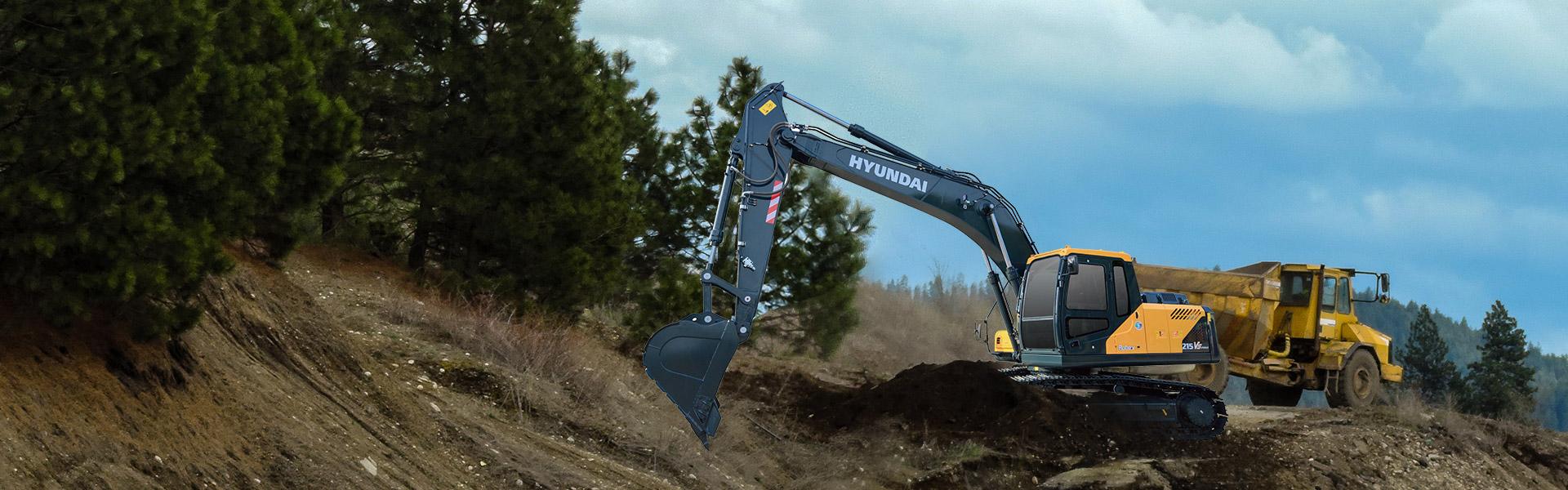
Hyundai HX75PRO 7 Ton Mini Excavator: Stage IV, No DPF
 Nov 18, 2026|
 View:31
Hyundai HX75PRO: A 7 Ton Mini Excavator That Skips the DPF
A 7 ton mini excavator does not get judged on peak output. It gets judged on whether it fits through the gate, how many cycles it completes between breakfast and lunch, and whether it is still working at the end of the month. The Hyundai HX75PRO is the refreshed 7 ton class machine in the HX series, with a 6,950 kg operating weight, a 0.32 m³ bucket and a 36.2 kW Yanmar 4TNV94L. Its distinguishing choice is on the emissions side: it meets China Stage IV without a diesel particulate filter. This HX75PRO review covers the engine, the load-sensing hydraulic system, the structure and service points, the cab, and the published figures, and separates what the supplier states from what a buyer should confirm for their own market.
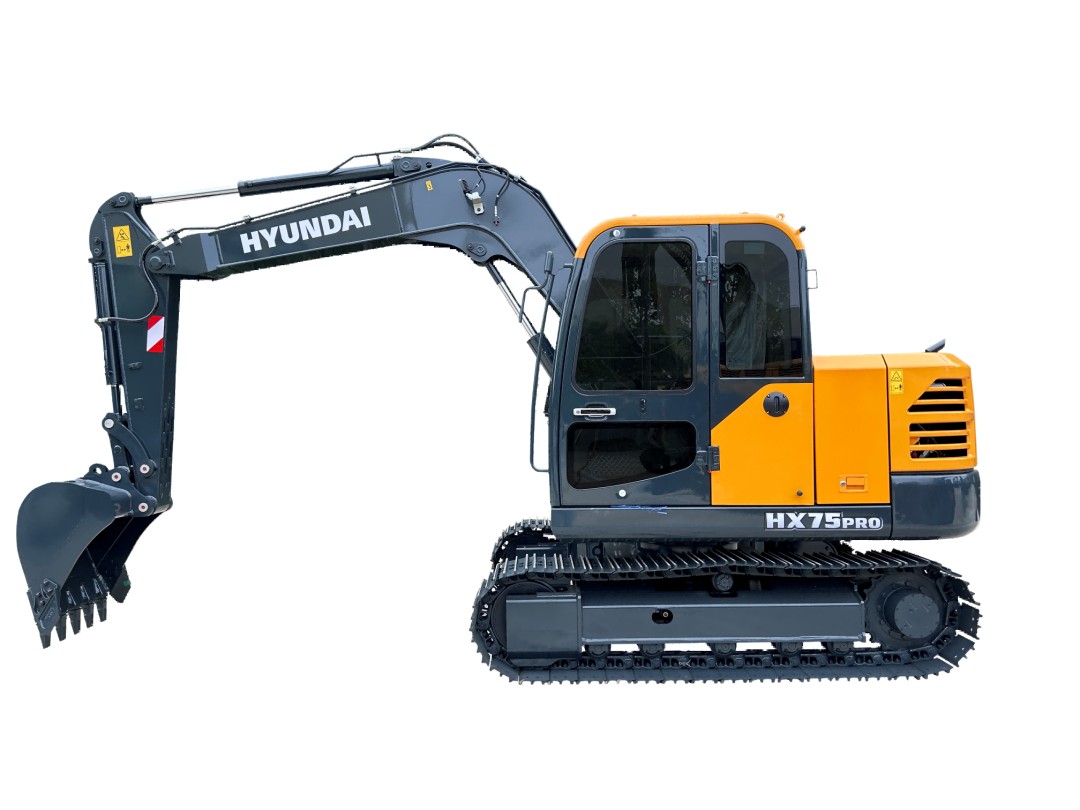
HX75PRO: 6,950 kg operating weight, 0.32 m³ bucket, 36.2 kW Yanmar 4TNV94L.
Key Takeaways
The HX75PRO runs at 6,950 kg operating weight with a 0.32 m³ bucket, sized for municipal trenching, road repair, landscaping and rental work rather than bulk stripping.
Yanmar 4TNV94L rated 36.2 kW at 2,200 rpm, with 200.8 N·m at 1,400 rpm, meeting China Stage IV without a DPF.
On the HX75PRO, no DPF means no regeneration cycle, no filter cleaning and no filter replacement interval to schedule around.
HX75PRO hydraulics: LS load sensing with an electronically controlled Rexroth main pump at 158.4 L/min, single pump supply.
P and S work modes, adjustable pump sensitivity, a thumb-operated deceleration switch and one-touch plus auto idle.
Parallel cooling module, fully opening hoods, grouped filters and a self-cleaning air pre-cleaner that needs no element changes.
Engine mounts and a standard HX75PRO air suspension seat cut seat vibration by around 30%.
LCD cluster with fuel level, oil and coolant temperature, engine speed, hour meter, fault diagnosis and a password lock.
Where the HX75PRO Fits in the 7 Ton Class
The 7 ton mini excavator class is not bought for mine stripping. It is bought for the work that fills a municipal schedule: pipe trenches and backfill, road patching and ditch cleaning, landscaping and nursery work, irrigation and drainage on farmland, small earthmoving and demolition clearance, and the day-rate jobs that make up a rental fleet. What those jobs share is that the machine has to be moved often, work in a space someone else has already narrowed, and finish before the client's deadline.
Three constraints decide whether a machine in this class earns: access, cycle time and uptime. Access decides whether the machine can start at all, which is why a 6,950 kg carrier on a compact tail swing matters more than an extra kilowatt. Cycle time decides how many trenches a day the machine completes. Uptime decides whether the machine is on site when the crew arrives, and on a 7 ton unit the biggest uptime risk is usually not a major failure but a small one: a hose, a filter, a sensor, or in the case of a Stage IV engine with a DPF, a regeneration that arrives at the wrong moment.
What the HX75PRO is not for
It is worth being direct about the limits. The HX75PRO 0.32 m³ bucket and 36.2 kW are not going to compete with a 20 ton machine on a bulk cut, and a 7 ton carrier is not the tool for continuous rock breaking or long-reach work. If the job is moving thousands of cubic meters a day, look at the larger crawler classes. The HX75PRO is the machine you buy when the constraint is access and variety rather than volume.
Engine: China Stage IV Without a DPF
The HX75PRO uses the Yanmar 4TNV94L, rated 36.2 kW at 2,200 rpm with 200.8 N·m of torque at 1,400 rpm. The figure that separates the HX75PRO from most China Stage IV mini excavators is that it does not carry a diesel particulate filter. The supplier routes compliance through combustion calibration rather than through a wall-flow filter, and the benefits claimed are practical rather than theoretical.
Why regeneration is the real cost of a DPF
On a China Stage IV mini excavator, a DPF is not a fixed cost. Soot accumulates at a rate set by duty, and when the filter loads up the machine either regenerates on its own, usually at the least convenient point in the day, or requires a parked regeneration, cleaning or replacement. On a machine that runs short cycles in dusty conditions and often at part load, that is a real interruption: the crew waits, the trench sits open, and the day rate does not change. Removing the filter removes that whole category of event, which is why the sales argument for the HX75PRO is uptime as much as emissions.
What compensates for the missing filter
On the HX75PRO, compliance without a filter has to come from the combustion process and the fuel path. Three design points are stated by the supplier: a coating applied to the engine block to improve wear resistance, a three-stage fuel filtration system that raises tolerance to poor-quality diesel and protects the injection system, and a revised main control valve oil circuit that improves working speed and combined-operation response between boom, arm and swing. The filtration point deserves attention in markets where fuel quality varies: on a common-rail engine, injector damage from contaminated fuel costs far more than the filter that would have prevented it.
A note for export buyers
The specification above describes the China Stage IV configuration, which is what the HX75PRO is sold as in the domestic market. Export configurations are not automatically equivalent: emission packages are set by destination market and by the power band the machine is registered in. Buyers in Europe or North America should not assume that a China Stage IV machine meets EU Stage V or EPA Tier 4 Final requirements, and should confirm the compliance package for their own jurisdiction before ordering. Background on why diesel after-treatment and fuel sulfur limits matter is published by the US environmental regulator for transport emissions.
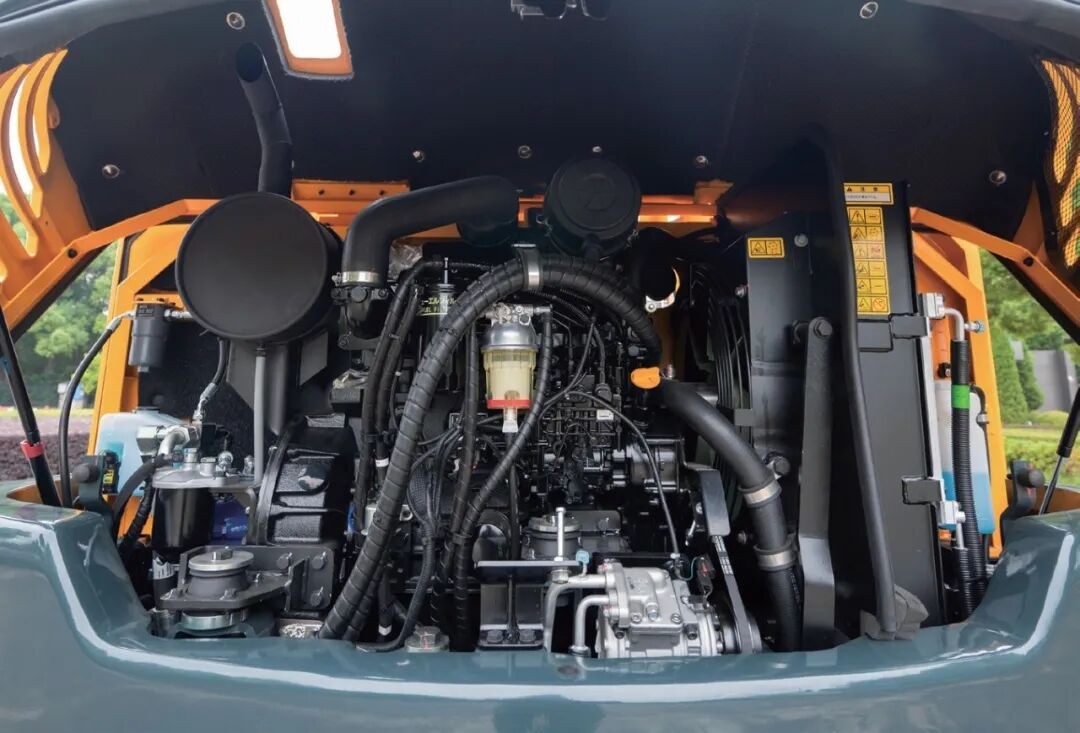
Yanmar 4TNV94L, 36.2 kW at 2,200 rpm, with no DPF in the exhaust path.
Need current pricing, attachment options or a specification sheet for the Hyundai HX75PRO?
Request a QuoteHydraulics: Load Sensing and a Single Rexroth Pump
The HX75PRO uses an LS load-sensing system with an electronically controlled Rexroth main pump rated at 158.4 L/min, on single pump supply. Load sensing means the pump delivers flow in proportion to how far the operator moves the lever, and the flow is independent of the load the cylinder is working against. What that changes in practice is the feel at the joystick: the bucket starts moving when the lever moves rather than when the engine builds enough pressure, and fine grading becomes a matter of hand position instead of a negotiation with the hydraulics.
No confluence, less wasted flow
The HX75PRO LS system does not need to combine pump flows to move a function, which is where some of the fuel saving comes from: flow that is not needed is not produced. When the machine travels, additional flow is made available so traction force and travel speed both improve, which matters on a 7 ton unit that spends part of every job walking between positions. The single-pump arrangement also keeps independent functions responsive, since one function no longer waits on the other half of a shared supply.
Pulsation damper and noise
A 45 cc pulsation damper is fitted at the HX75PRO main pump to absorb pressure ripple. Pressure ripple is what turns hydraulic flow into structure-borne noise, so damping it reduces noise inside the cab and around the machine, with the supplier quoting a 3% to 8% reduction and compliance with the national limit of 80 dB or lower. On municipal work in residential streets, and on any job with a noise restriction window, that is a working specification rather than a comfort note.
Attachments without re-tuning
On the HX75PRO, load sensing holds its behavior across attachments in a way that fixed-flow systems do not. A breaker, an auger or a grapple each present a different load pattern, and the supplier states that LS maintains stable performance with continuous control and multiple combined functions, with swing speed holding steady. In a rental fleet, where one machine may run three attachments in a week, that consistency is what keeps the machine billable instead of parked.
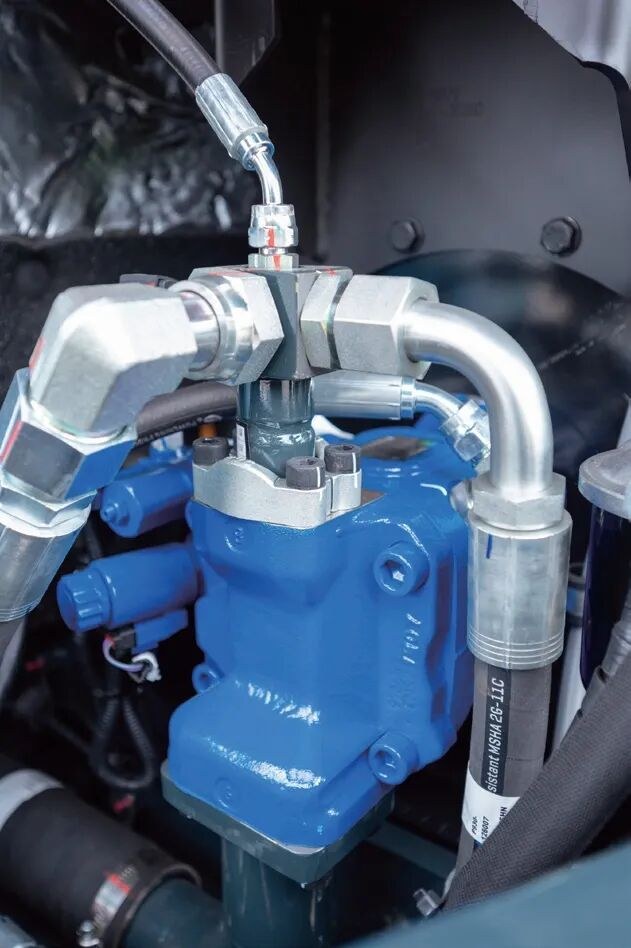
LS load-sensing circuit with an electronically controlled Rexroth main pump, 158.4 L/min.
Fuel: P/S Mode and the Idle Controls
On a machine billed by the day or by the shift, fuel is the difference between a profitable job and a break-even one. The HX75PRO puts four controls in the operator's hands rather than relying on habit alone.
P and S work modes, with the S mode running at roughly 1,300 to 1,400 rpm presented as the economical band for general work.
Adjustable pump sensitivity from the display, which lets the machine's power output be matched to the duty rather than left at one factory setting.
A thumb-operated deceleration switch on the left lever, which drops engine speed without taking a hand off the controls.
One-touch idle and auto idle for the waits that make up a surprising share of a mini excavator's day.
The point is not that any one of these saves a dramatic amount. It is that a 7 ton mini excavator for utility work spends a large share of its hours at part load, waiting for a spotter, a truck or a concrete saw, and idle fuel at part load is where small machines quietly lose money. Controls that make it easy to bring engine speed down are worth more than a headline percentage.
Structure, Cooling and Service Access
The HX75PRO works on surfaces that were never prepared for them: unsealed yard entrances, narrow lanes, demolition rubble, freshly backfilled trenches. Durability on this class is therefore about the frame and the service points as much as the attachment.
Frame and cooling
The HX75PRO upper and lower frames are built to absorb impact and working stress, with an X-type center frame and reinforced box sections. The cooling module uses a parallel arrangement rather than a stacked one, which raises cooling efficiency and makes the fins easier to clean. On a machine that works in dust and demolition debris, cleanable cooling is what keeps the hydraulic oil temperature where it belongs through a long summer shift.
Service access and consumables
On the HX75PRO the hoods open fully so filters and fill points are reachable without dismantling panels, and the fuel filler is positioned for filling from ground level. The air pre-cleaner is a reverse-flow type that discharges its own dust and is described as maintenance-free for life, which removes the daily element cleaning that dusty sites usually require. Bucket teeth are the industry-standard horizontal pin type, so replacements are available rather than proprietary.
Cold climate and storage
A dual-battery option is offered on the HX75PRO for reliable starting in cold regions, and the counterweight is raised at both sides for better impact protection. Storage compartments take a grease keg, and a grease gun holder is provided, which is a small detail that decides whether the machine actually gets greased on site.
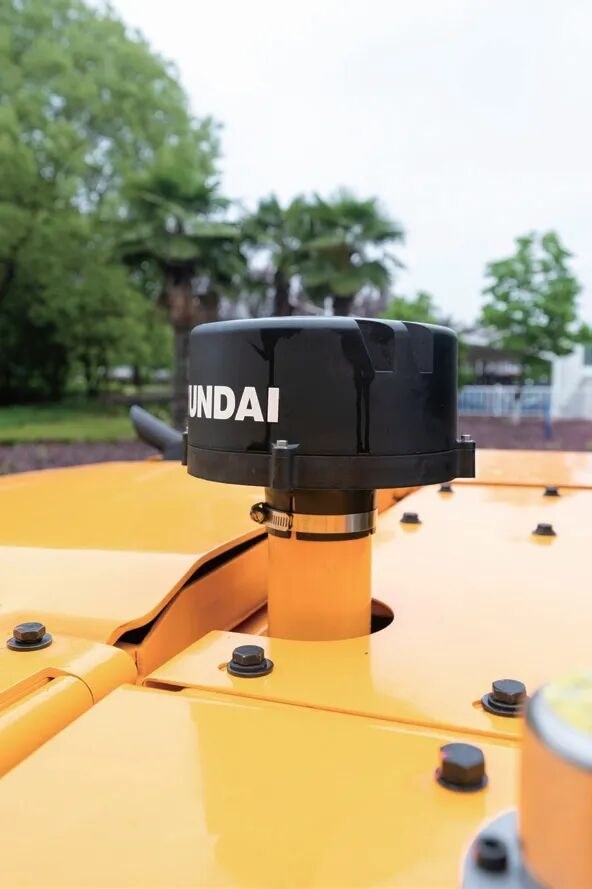
Reverse-flow air pre-cleaner discharges its own dust and needs no element changes.
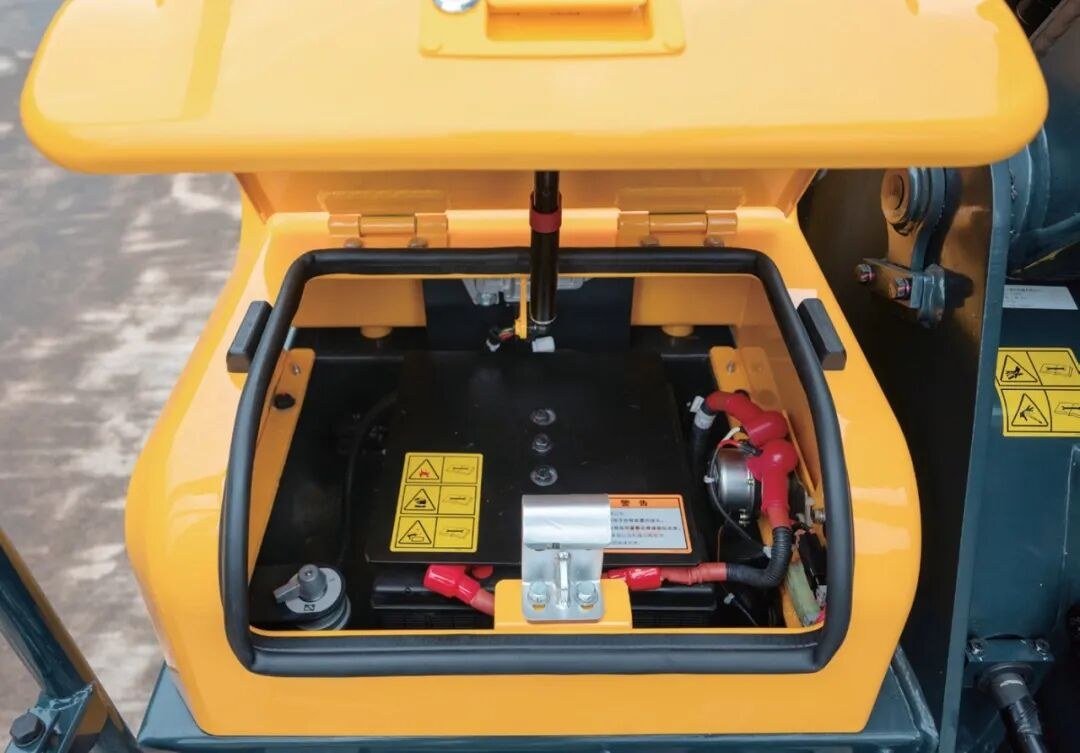
Battery compartment under the rear cover; dual batteries are an option for cold regions.
Cab and Controls
On a machine like the HX75PRO, run for eight hours in a trench line, comfort converts directly into output. Engine mounts are specified to isolate vibration, and the standard seat is an air suspension unit adjustable fore and aft as well as vertically, with the supplier quoting a roughly 30% reduction in seat vibration. RCV joysticks are described as lighter and better coordinated, and automatic high-low travel selection means the operator does not have to shift range when the machine climbs a ramp.
The HX75PRO layout follows the same logic: the travel levers and foot pedals have more clearance, the integrated console keeps functions within reach, and a radio is fitted as standard. The LCD display covers fuel level, oil and coolant temperature, engine speed, clock and hour meter, and adds fault diagnosis and a password lock. On a rental machine the password lock is not a gadget: it is the difference between a unit that goes out with a key and one that goes out with an operator.
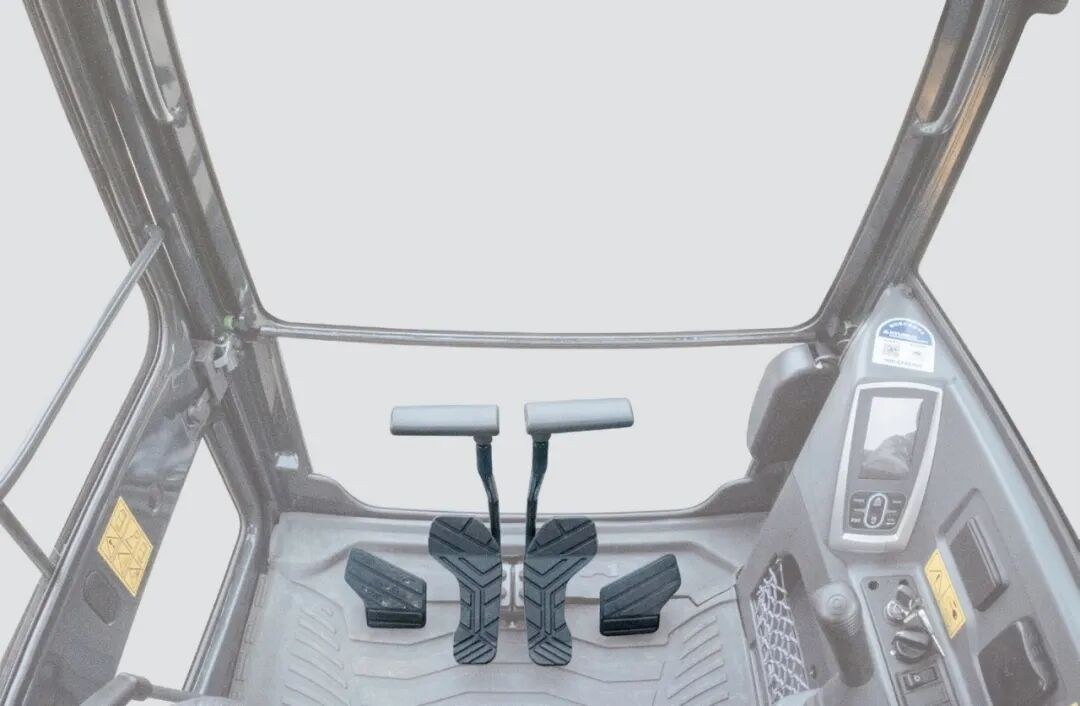
Wider spacing for travel levers and pedals, with the integrated console at the right.
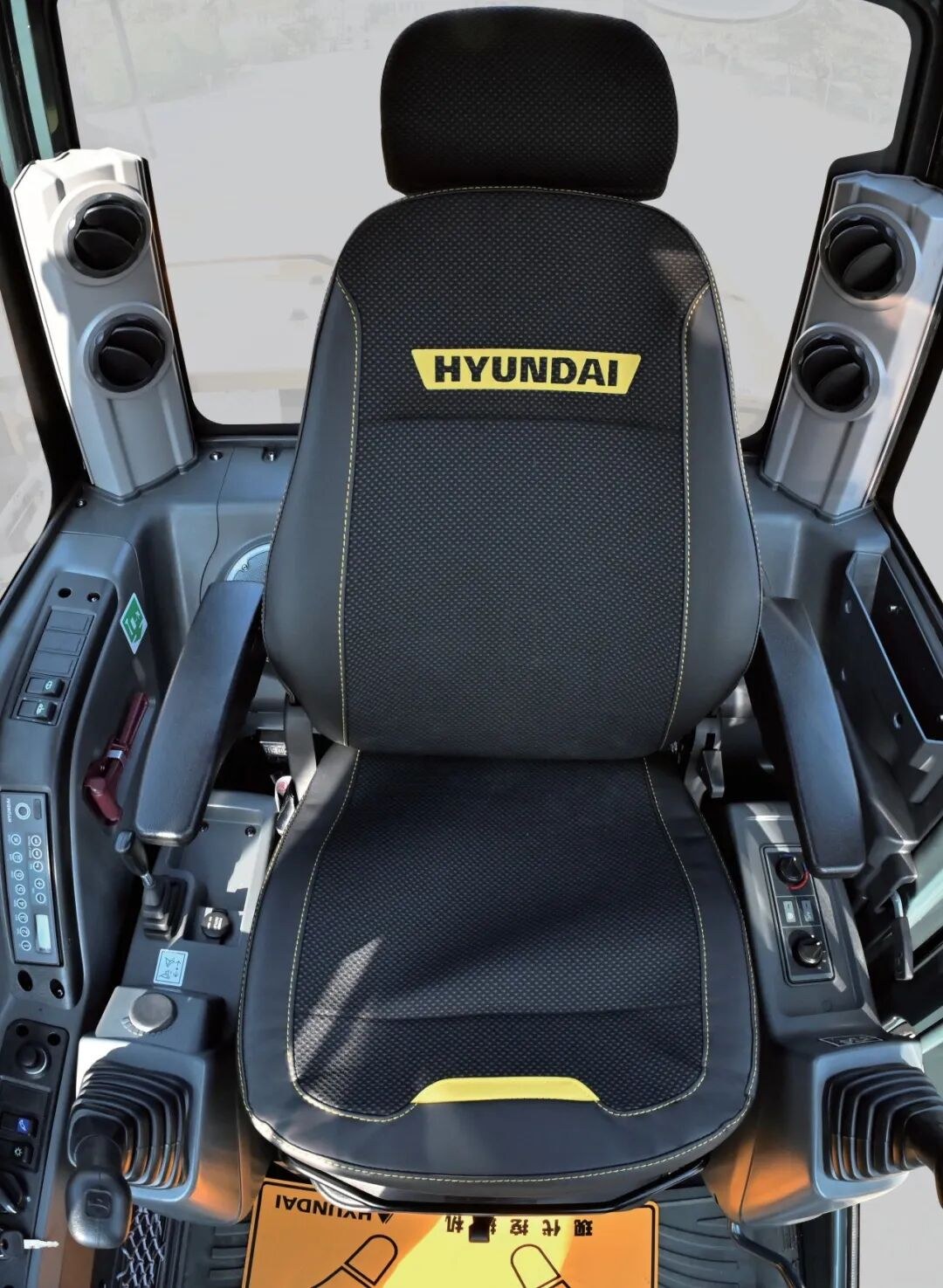
Standard air suspension seat, adjustable fore, aft and vertically.
Operating a Mini Excavator Safely
Most mini excavator incidents on utility work happen around the trench rather than at the controls: unsupported faces, spoil piled at the edge, and people working in the excavation while the machine is still loading out. The machine side of that is stability and visibility, which the compact tail swing and the cab layout address. The site side is procedure, and it is documented in the trenching and excavation safety guidance published by the US labor safety authority. A machine that fits the lane is only an advantage if the trench behind it is protected.
HX75PRO Published Specifications
The Hyundai HX75PRO specifications below are as published by the supplier for the China Stage IV configuration. This model does not yet have a dedicated page on this website; the values are stated as supplied, and the full dimension and working range sheet should be requested for a specific build and destination market.
| Item | HX75PRO |
|---|---|
| Machine class | 7 ton class mini excavator |
| Operating weight | 6,950 kg |
| Bucket capacity | 0.32 m³ |
| Engine model | Yanmar 4TNV94L |
| Emission | China Stage IV, no DPF |
| Rated power | 36.2 kW / 48.5 hp at 2,200 rpm |
| Maximum torque | 200.8 N·m at 1,400 rpm |
| Hydraulic system | LS load sensing, electronically controlled Rexroth main pump |
| Main pump flow | 158.4 L/min, single pump supply |
| Work modes | P / S |
| Noise | 3% to 8% reduction via pump pulsation damper; within 80 dB limit |
| Seat | Air suspension, standard |
| Display | LCD with fault diagnosis and password lock |
Conclusion and Next Steps
The HX75PRO is a machine built around the constraints of small-site work rather than around a power figure. No DPF removes a scheduled interruption from the working month, load sensing with a single electronically controlled pump gives precise flow without confluence losses, the P/S modes and idle controls put fuel decisions in the operator's hands, and the service design, from the parallel cooling module to the self-cleaning pre-cleaner and fully opening hoods, is aimed at the daily ten minutes that decide whether checks get done.
For buyers comparing the HX75PRO against other classes, the sensible next step is to match the machine to the actual mix of work rather than to a single job: how wide the access is, how many trenches a day, which attachments, and who operates it. If you are still deciding between classes, the excavator range shows the smaller and larger options in the same series, the HX60PRO crawler excavator covers the step below, and the excavator pricing guide sets out what drives cost in each class. Buyers weighing undercarriage type should also read the tracked versus wheeled comparison, since on utility work the choice often decides access before it decides output.
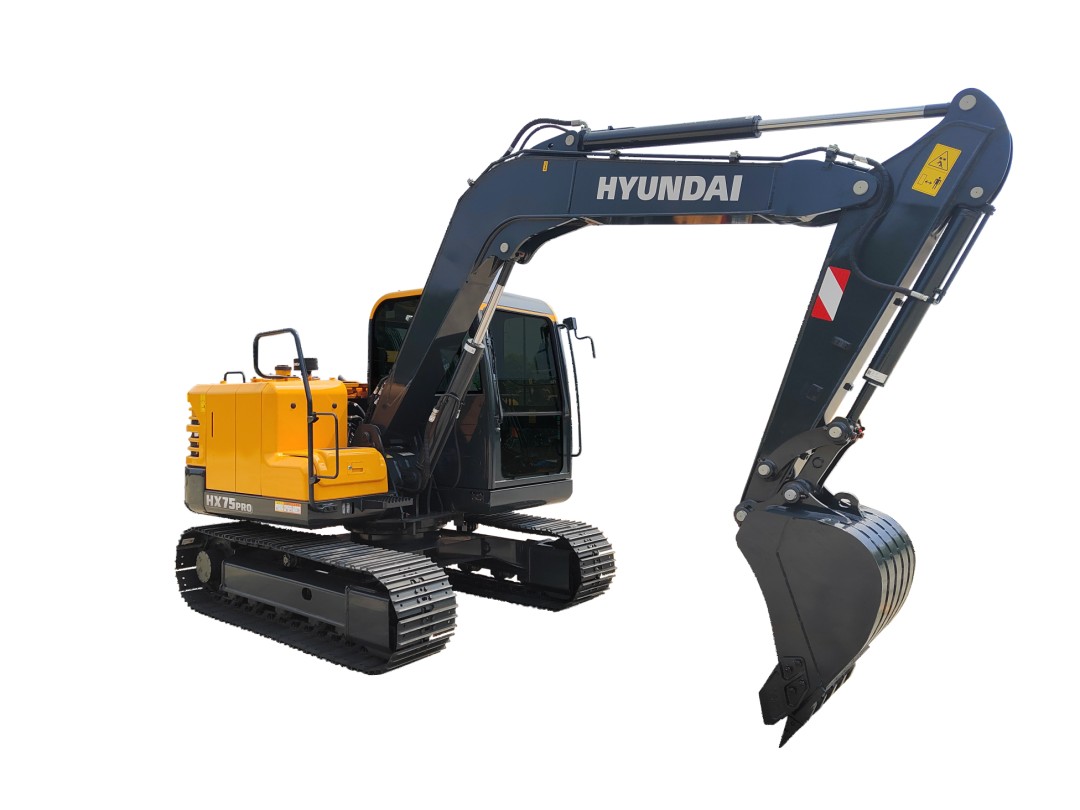
HX75PRO: 36.2 kW, 0.32 m³, China Stage IV without a DPF.
Want to price an HX75PRO for your market?
Send your work mix, attachment list and destination port. We reply with the configuration sheet, quotation validity and delivery estimate.
Get Your HX75PRO QuoteFAQ
Does the HX75PRO really have no DPF?
In its China Stage IV configuration, yes: compliance is achieved without a diesel particulate filter, so there is no regeneration cycle, no filter cleaning and no filter replacement interval. Export configurations can differ by destination market and must be confirmed before ordering.
Can the HX75PRO be sold into Europe or North America as it is?
Not automatically. China Stage IV compliance is not the same demonstration as EU Stage V or EPA Tier 4 Final, and the required emission package depends on the power band and the market. Treat the domestic specification as a starting point and confirm the approved configuration for your jurisdiction.
What is the advantage of HX75PRO load sensing?
Flow follows lever position rather than load, so the machine responds at the first movement of the joystick and fine grading becomes easier. The system also avoids confluence losses and holds stable behavior across breaker, auger and grapple work, which matters when one machine covers several job types.
Which attachments can the HX75PRO run?
The supplier cites breaker, auger and grapple work as supported by the hydraulic system, with LS maintaining control across them. Final attachment compatibility, including required extra circuits and flow settings, is confirmed per build at order stage.
How much fuel does the HX75PRO P/S mode and idle control save?
There is no single percentage that applies to every job. The saving depends on how much of the working day is spent at part load or idling, and utility work typically contains a lot of both. The practical way to judge it is to run the same task in S mode with auto idle enabled and compare daily consumption.
Is a 7 ton machine enough for trenching work?
For a 7 ton mini excavator on municipal service trenches, footings, drainage runs and landscaping it is the usual choice, because it reaches depth without needing a wider access route. Where trenches are deep, wide or in rock, a larger class or a different attachment set is the better match. Working depth and reach for the specific boom and arm combination should be confirmed from the dimension sheet.
Contact Tianheng
Jiangsu Tianhengweiye Construction Machine Co., Ltd supplies Hyundai excavators and genuine parts for export markets, backed by a large genuine parts inventory and a network of direct-operated branches. For product data, attachment options and after-sales support, use the details below.
Address: No. 267, Hehai West Road, Changzhou, Jiangsu, China
Tel / WhatsApp: 0086-18951208765
Email: hyundai@th-mach.com or sale@th-mach.com
Excavator range: www.th-mach.com/product_category/Excavator.html
Website: www.th-mach.com