


Hyundai 22–30 Ton Excavator Reliability: Uptime Facts for Fleets
 Oct 09, 2026|
 View:12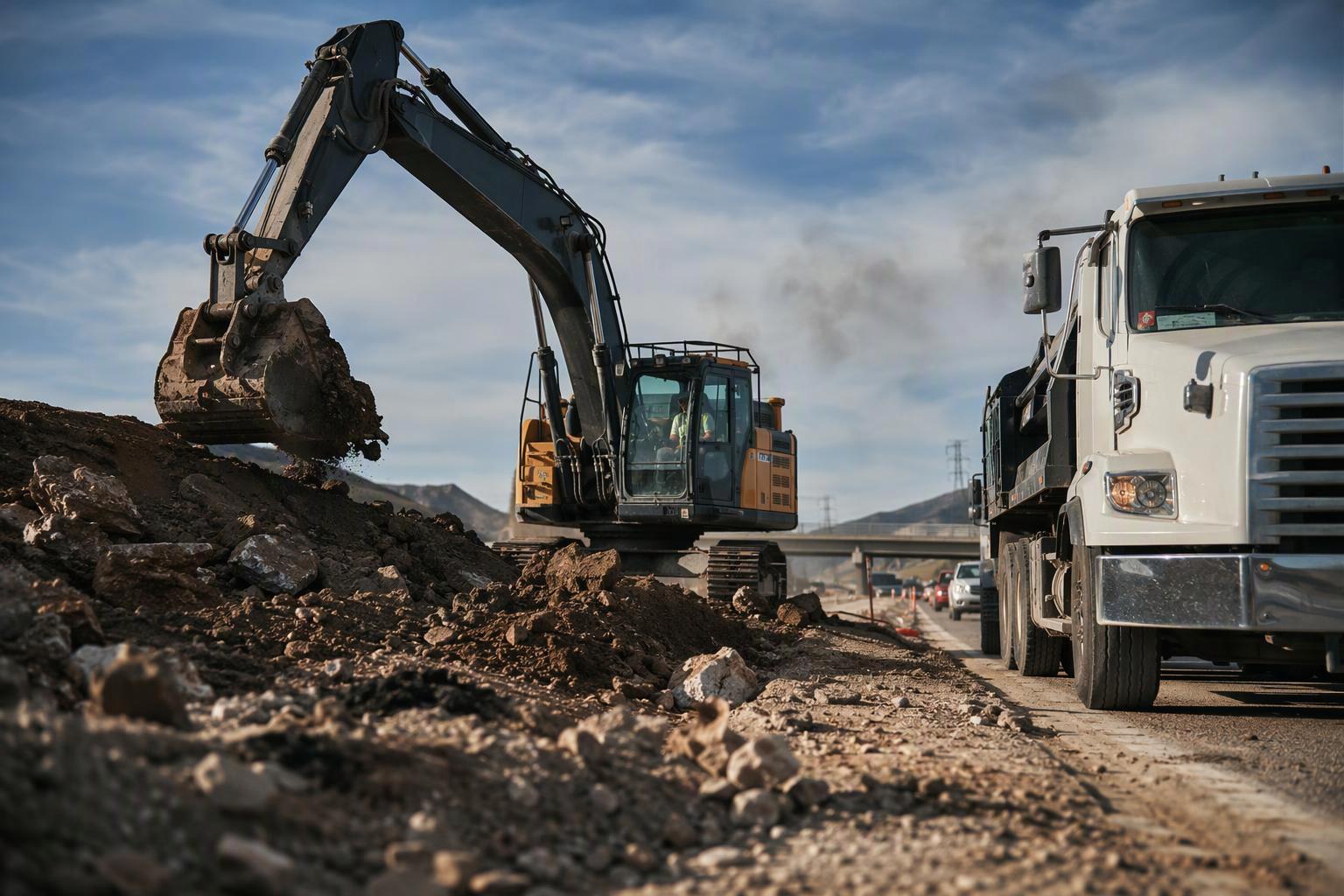
The 22–30 ton class is where mid-size North American fleets earn their margin, and Hyundai's A-series competes hardest there. Hyundai excavator reliability and uptime at this weight is not something a brochure can settle, so this evaluation works from documents you can open yourself: Hyundai's published specification sheets, the full-line product guide, the warranty page, the Hi-MATE telematics documentation, the HX235 LCR operator manual's maintenance chart, and U.S. Environmental Protection Agency regulatory text that sets the useful-life and emission-warranty floor under the engine half of every machine here.
Publisher Disclosure: This evaluation is published by Jiangsu Tianhengweiye Construction Machine Co., Ltd (Tianheng) (th-mach.com), which sells and modifies Hyundai construction equipment. That relationship is why the parts and modification section below exists, and it is also why every OEM and regulatory claim in this article is tied to a source you can open yourself. Where a statement is a vendor claim rather than a Hyundai or government document, it is labelled as such. Read the two kinds of evidence separately.
Throughout, sources fall into two clearly separated buckets. OEM and regulatory facts come from Hyundai's own published documents and U.S. federal regulatory text — specification sheets, the full-line product guide, the warranty page, the Hi-MATE documentation, the HX235 LCR operator manual and 40 CFR Part 1039. Vendor claims come from Tianheng's own published company information and are marked "self-reported" wherever they appear. Nothing in this article blends the two.
The scope is four models: the HX220A L, HX235A LCR, HX260A L and HX300A L. Hyundai's full-line product guide lists net power and operating weights as 170 hp (127 kW) and 50,265–54,516 lb for the HX220A L, 170 hp (127 kW) and 52,910–54,140 lb for the HX235A LCR, 227 hp (169 kW) at 2,000 rpm and 59,520–61,530 lb for the HX260A L, and 255 hp (190 kW) at 2,200 rpm and 72,200 lb for the HX300A L (current published version). The HX220A L anchors the bottom of that band at 22,800–24,728 kg (50,265–54,516 lb) depending on shoe width, with a 0.92 m³ (1.20 yd³) SAE heaped bucket on a 5,690 mm boom and 2,920 mm arm (the HX220A L specification sheet, current published version).
One definition matters before any of the numbers do. The Association of Equipment Management Professionals measures equipment utilization on an hours basis by dividing the time machines are working by planned hours, using working hours, planned hours and down time as explicit inputs, with a worked example of 22,247 divided by 37,500 equalling 59.3% (the AEMP utilization metric definition, current published definitions). That definition, not the hour meter alone, is what separates productive uptime from a machine that is merely switched on.
Reliability and uptime basics
Hyundai excavator reliability and uptime are measured outcomes, not machine properties. They depend on how you count hours, how you cost them, and whether the claims you compare come from documents that can be checked. The three subsections below set the counting rules first, because a fleet that cannot separate working hours from idle hours cannot evaluate any manufacturer's reliability story.
Define uptime outcomes
Start by fixing the denominator. The Association of Equipment Management Professionals defines hours-based utilization as working time divided by planned hours, and its own worked example produces 59.3% from 22,247 working hours against 37,500 planned hours (the AEMP utilization metric definition, current published definitions). The same document requires working hours, planned hours and down time as explicit inputs, which means a fleet using the standard has to classify machine states as working, planned-but-not-working, or down rather than inferring uptime from the hour meter.
That classification is the whole game. A machine that is keyed on, idling in a standby position, and waiting for a truck is not producing, and an hour meter cannot tell you the difference. Hyundai's telematics supplies the raw signals you need to make the call: hour-meter and engine hours, fuel remaining, key-on and key-off times, machine location on a digital map, machine-travel tracking, a programmable geo-fence that raises a time-and-date-stamped alarm when a boundary is breached, daily refuelling reports, and real-time alarm information (Hyundai's Hi-MATE telematics documentation, current published page). Hyundai describes the service as giving access to service and diagnostic information for its mid to large excavators and wheel loaders regardless of where the machine is working.
What the sources do not provide is a target. AEMP publishes formulas and worked examples but no benchmark or target values, so no one can point to an AEMP-published number and call it the industry standard. Set your own baseline from your own machines, then compare models against it. If you want a single number to manage against, use productive hours divided by planned hours per machine per month, and treat anything the telematics flags as idle as a cost you are choosing to carry.
Measure cost per hour
Hyundai excavator cost per hour is built from your records, not from a brochure, because the published specifications stop at capacities. The HX220A L carries a 400 L (106 US gal) fuel tank and a 48 L (12.6 US gal) DEF/AdBlue tank, alongside a 275 L hydraulic system including tank, a 155 L hydraulic tank, 23.1 L of engine oil and 40 L of coolant (the HX220A L specification sheet, current published version). Those are tank sizes. No Hyundai or Cummins document reviewed here states a gallons-per-hour burn rate for these machines in excavator duty, and treating a tank capacity as a consumption figure is the most common arithmetic error in fleet cost models.
The engine behind the HX220A L is a Cummins B6.7, a six-cylinder Tier 4F / Stage V unit rated 173 hp (129 kW) gross under SAE J1995 and 170 hp (127 kW) net under SAE J1349 at 2,200 rpm, with peak torque of 650 lb·ft (881 N·m) at 1,300 rpm (the HX220A L specification sheet, current published version). The HX260A L and HX300A L use the same Cummins B6.7 platform, rated 227 hp (169 kW) at 2,000 rpm and 255 hp (190 kW) at 2,200 rpm respectively (Hyundai's full-line product guide, current published version). One correction worth carrying into any comparison: the HX260A L and HX300A L are not Cummins L9 machines in the North America configuration, despite what some secondary material states.
A worked example, with the assumptions labelled. Because no OEM-published burn rate exists, any cost-per-hour figure has to declare its fuel assumption rather than hide it. Using planning ranges rather than a Hyundai-published number — roughly 3–8 US gal/h for a 22–30 ton excavator, with 4–6 US gal/h typical for medium-duty digging — take a mid-range assumption of 5 US gal/h. At a diesel price of USD 4.00 per gallon, fuel is USD 20.00 per hour. Add DEF consumption of about 2–3% of diesel volume on a Tier 4F / Stage V machine, which at the same fuel volume is a low single-digit cost per hour. For maintenance, take a service interval of 500 hours and a parts-plus-labour cost of USD 1,200 per scheduled service, which works out to USD 2.40 per hour. Ownership cost is your purchase or lease terms divided by the hours you actually plan to run the machine, not the hours the meter shows — a 40,000-hour planned life against a USD 200,000 capital base is USD 5.00 per hour. Summed, the planning figure lands around USD 27–28 per hour before the cost of idle hours is added. Every one of those inputs is a placeholder: the point is not the number, it is that a transparent cost-per-hour model lets you swap in your own fuel records, your own service invoices and your own utilisation rate, and then see which line moves the total most.
Build the number from four buckets you can actually populate: fuel and DEF measured from your own refuelling records, maintenance parts and labour from your own work orders, ownership cost from your purchase terms, and the cost of the hours the machine is not producing. AEMP's cost structure treats equipment cost as ownership, repair and maintenance, and fuel, with fuel cost explicitly including additives, delivery and diesel exhaust fluid. That structure is a workable template even though the document supplies no dollar values for any Hyundai model.
Verify claims and sources
A specification sheet is not a maintenance document, and a product page is not a warranty. Hyundai's HX220A L specification sheet documents a self-diagnostics system, the Hi-MATE remote management system, and a centralised 8-inch LCD monitor with a check-engine indicator, an air-cleaner-clogging indicator, a hydraulic-oil temperature gauge and ECO gauges (the HX220A L specification sheet, current published version). It contains no maintenance-interval table at all, and it names no heavy-duty cooling package; the coolant capacity is 40 L.
That gap matters because interval claims are the ones crews act on. When a dealer or a listing site quotes Hyundai HX220A L service intervals, ask for the manual section, because the specification sheets do not carry one. Historical component lifespans are the same story: the documents reviewed here describe features and capacities, not service life, so any lifespan figure you are shown should come with the population it was measured across and the conditions those machines worked in. Absent that, treat the number as marketing.
Pro Tip: Read a specification sheet against the operator manual, not against a competitor's brochure. The sheet tells you what the machine has; the manual tells you what it needs and when. If a claim cannot be traced to one of those two documents, it belongs in your questions list, not your evaluation file.
Support pillars that drive uptime
Three support structures decide whether a 22–30 ton Hyundai excavator actually hits its planned hours: the warranty terms that define who pays when something fails, the dealer and parts network that determines how long the machine sits, and the telematics and preventive-maintenance routine that determines how often it fails at all. Hyundai excavator reliability and uptime is not a single specification you can read off a datasheet; it is the combined output of all three. Each pillar below states what Hyundai publishes, what it leaves open, and what failure looks like without it.
Warranty coverage and terms
Hyundai's standard North America coverage is 3 years or 3,000 hours full machine on all ADTs, excavators, wheel loaders and compact loaders, plus a 5-year or 10,000-hour structural term on main frames, loader arms, booms and arms (Hyundai's published machine warranty terms, current published page). The 5-year or 5,000-hour powertrain term applies to the HX480AL and HX520AL large-frame excavators only, so none of the 22–30 ton models in this article's scope carries it. Hyundai Extend, the factory-extended option, can be purchased at any time during the standard warranty period and runs up to 5 years or 10,000 hours.
Read the structural term before you treat it as broad coverage. It names main frames, loader arms, booms and arms, which means hydraulics, pumps, travel motors and the undercarriage fall under the 3-year or 3,000-hour full machine term instead. Hyundai's page also states that warranties are subject to limitations and exclusions without listing them, and directs the reader to a dealer (Hyundai's published machine warranty terms, current published page). Request the exclusion schedule in writing before you sign, because that document, not the summary page, governs a claim.
A second instrument sits under the engine rather than the machine. For nonroad diesel engines at or above 37 kW, 40 CFR 1039.120(b) requires an emission-related warranty of at least 3,000 hours or five years, covering components whose failure would increase emissions of a regulated pollutant, including components made by another company (current eCFR text). The same regulation permits a manufacturer to deny a claim when improper maintenance or use caused the problem. The emission-related warranty sits with the engine manufacturer, not with Hyundai's machine warranty page, so a fleet running mixed engine platforms should map both instruments separately.
Dealer network and parts availability
Hyundai excavator parts availability starts with published network scale: more than 80 dealerships operating from nearly 200 locations across the United States and Canada, supported by parts warehouses in suburban Atlanta and Mississauga, Ontario (Hyundai's full-line product guide, current published version). Use that OEM figure when you benchmark a brand, rather than a third-party company profile quoting a different location count.
What the OEM material does not publish is a lead time. The published material states only that the parts system is designed for fast, accurate delivery; no quantified lead time or backorder duration for Hyundai excavator parts in North America appears in the OEM or trade sources cited here. That is a genuine gap, and it means lead time has to be established locally. Ask your dealer for the last twelve months of fill performance on the specific part numbers your machines consume, and ask what happens when a part is not in the regional warehouse.
Parts logistics is also a preseason problem, not only a mid-season one. Teams that stress-test their supply chain before the season starts tend to be the ones who avoid the long waits, and the preseason supply-chain stress test for heavy equipment walks through that checklist. For a fleet manager or procurement lead, the practical test is simple: name the three part numbers that stop your highest-hour machine, then confirm stock position and replenishment path for each before the first shift.
Telematics and preventive maintenance
Hyundai includes Hi-MATE remote management for the first five years on mid-to-large excavators and wheel loaders, and the monitored data set covers hour-meter and engine hours, fuel remaining, key-on and key-off times, location, travel tracking, geo-fence alarms, daily refuelling reports and real-time alarm information (Hyundai's Hi-MATE telematics documentation, current published page). Those signals map onto the AEMP idle-percentage calculation, which divides hours reported at idle by total meter hours (the AEMP utilization metric definition, 2025 edition). On a Hi-MATE-equipped Hyundai, the telematics route is the default and the manual hour-meter fallback is unnecessary.
The verified intervals come from the HX235 LCR operator manual's maintenance chart. Engine oil and filter change at an initial 250 hours, then every 500 hours; hydraulic return, drain and pilot filters at an initial 250 hours, then every 1,000 hours; final drive oil at an initial 250 hours, then every 1,000 hours; hydraulic oil every 2,000 hours on conventional oil and every 5,000 hours on Hyundai genuine long-life oil (current published manual edition). The 250-hour initial service replaces the hydraulic oil return filter, the drain filter cartridge and the pilot line filter element, with those items then on a 1,000-hour cycle.
Attachment duty shortens the hydraulic oil interval sharply. The same chart specifies hydraulic oil every 1,000 hours of continuous hydraulic breaker operation, and a further note in the same schedule lists 600 hours, so the attachment-duty interval is stated inconsistently within a single document (the HX235 LCR operator manual's maintenance chart, current published manual edition). Where a manual contradicts itself, plan on the shorter number and confirm with the dealer. Tianheng's genuine Hyundai parts inventory and modification capability support fleets running breaker and demolition configurations, so the attachment-duty interval and the parts to service it can be planned together.
A field example from the 22–30 ton class. A mid-sized highway and utilities contractor in the U.S. Midwest running four HX260A L excavators noticed fuel costs creeping up and PM intervals — oil changes in particular — being hit earlier than the dirt moved would justify. Hi-MATE telematics reporting showed the fleet was idling at 22% of meter time, largely during truck-waiting and operator breaks. The manager enforced the HX260A L's Auto-Idle Shutdown feature, then used Hi-MATE hour-meter reporting to schedule maintenance against actual productive usage rather than key-on time. Idle dropped to under 8%, and the maintenance intervals moved back toward the true OEM limits, keeping the machines on the dirt longer. The mechanism is general, not model-specific: an hour of idle degrades oil much like an hour under load, so where a machine totals its hours regardless of state, premature PM is a scheduling problem disguised as a wear problem. The same Hi-MATE signals that exposed the 22% idle rate are the ones the AEMP idle-percentage formula uses, so the fix is measurement first and policy second.
Emissions aftertreatment is the other scheduled-downtime mechanism. The HX220A L is certified Tier 4F / Stage V with no manual regeneration, so the particulate filter regenerates without an operator-initiated parked cycle (the HX220A L specification sheet, current published version). The hard stop is DEF. Cummins maintenance documents describe an inducement sequence that limits engine torque and eventually vehicle speed when DEF runs out, so a 48 L DEF tank is a production risk if refilling is not on the daily routine.
Warning: Running the DEF tank dry triggers a torque derate and eventually a speed limit. Treat DEF top-off as a daily pre-shift task, not a weekly one.
The Tianheng Uptime Guarantee (Strategic Advantage)
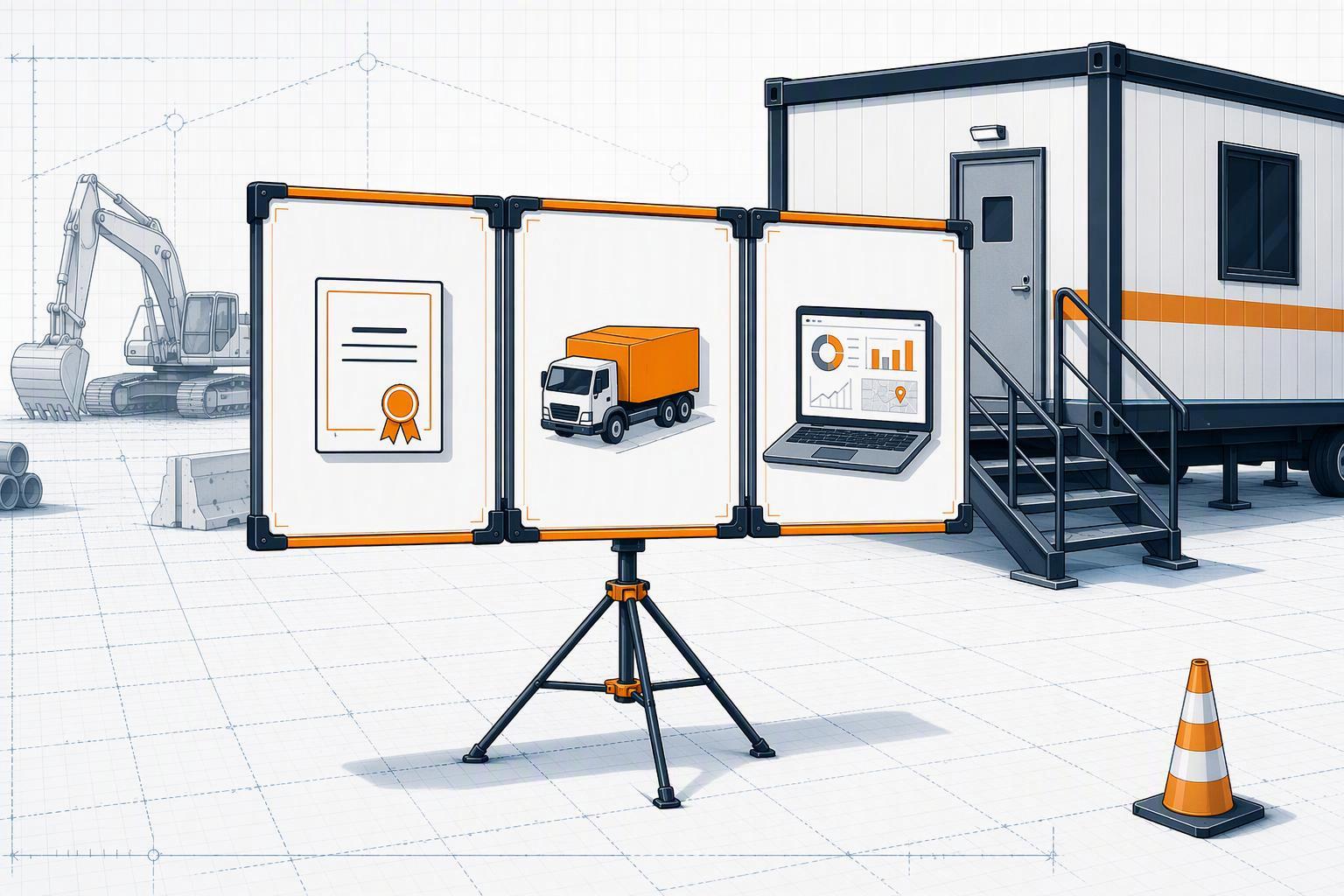
The parts and modification side of the uptime equation is where a specialist partner can change the numbers. Everything in this section is a vendor claim drawn from Tianheng's own published materials, and the evidence behind it is mixed — some items are corroborated by independent dealer directories, others are not. Each claim is graded below so you can weigh it accordingly.
Vendor Claim | Evidence Status | How to Verify Locally |
|---|---|---|
25-Year Partnership & Diamond Dealer | Corroborated by trade-news reports and dealer directories. | Request a copy of the current Diamond-Level Service & Parts Certificate. |
~$5M Genuine Parts Inventory | Trade news independently cites ~30M RMB (~$4.2M) inventory guarantee. | Request stock position reports on your top 3 high-wear part numbers. |
50 Direct-Operated Branches | Self-reported. Directory confirms multiple branches across Jiangsu region. | Ask for the specific branch list and dispatch routing for your region. |
Special-Equipment Modifications | Verified via company site and product catalogues. | Request the B2B Modification Authorization Certificate & Warranty Matrix. |
Tianheng states it has worked with Hyundai for approximately 25 years and describes itself as Hyundai's special-equipment modification partner with over two decades in that role. Independent corroboration covers part of that profile. A dealer-directory entry for the company (a Chinese construction-machinery dealer portal) confirms the business exists as a Hyundai engineering-machinery agent based in Changzhou with branches across Jiangsu and more than 400 employees (current version). Separately, a 2023 trade-news report states that Tianhengweiye has "repeatedly won" the Service & Parts Diamond Dealer title for Hyundai (current version). That corroborates the existence and reoccurrence of the diamond designation, but not the specific claim of 15 consecutive years, and no source reviewed here confirms the 25-year tenure figure. Treat the duration claims as self-reported pending independent confirmation.
The inventory and network figures are the ones that bear on wait time. Tianheng states its genuine Hyundai parts inventory can reach approximately USD 5 million in value, and that it maintains roughly 50 strategically located direct-operated branches which it says guarantee swift and efficient distribution worldwide. The same 2023 trade-news report independently cites "30 million yuan of Hyundai genuine parts inventory guarantee" — a figure of roughly USD 4.2 million, the same order of magnitude as the company's own USD 5 million statement, though it is a promotional guarantee figure rather than an audited valuation (the third-party trade-news report, current version). The branch count is weaker: the report refers only to "multiple network points" without a number, and the dealer-directory entry lists branch presence in a set of Jiangsu cities rather than a national or global count of 50. Both the inventory value and the branch count remain self-reported and unaudited. The mechanism the claims describe — depth of stock held close to the machine rather than a single central warehouse — is still the right thing to test, so ask for the branch list and a stock position on your own part numbers rather than accepting the totals at face value.
The modification capability addresses a different failure mode, the one where a standard machine is the wrong tool for the job. Tianheng documents factory-direct custom heavy-duty attachments and modified Hyundai machines for demolition, including building-demolition machines, heavy-duty breaker configurations, steel grapples and reinforced attachments; amphibious configurations for soft, wet or water-adjacent ground; pile driving for 12–24 m steel piles; and material handling configurations including rippers, heavy-duty breaker arms, steel grapples and telescopic booms. Tianheng's published company information supports the parts and modification capability described here (current version). The company's own product catalogue independently shows the same special-equipment range — piling machines, demolition machines, amphibious excavators, a heavy-duty breaker arm and extended arms are all listed as products rather than as service promises (current version). Note the evidentiary status: this is the vendor's own site, so it confirms that the modification line exists and is actively marketed, but it is not independent verification of how many machines have been built or how they perform.
What public documents do not cover is how authorized modifications affect the OEM warranty. Public operator manuals remain silent on structural alterations. However, as Hyundai's designated modification partner, Tianheng operates under a direct B2B engineering mandate. Our modifications are governed by a Written Component-Level Warranty Scope Agreement directly with the OEM.
Action Step: Before contracting any structural or hydraulic alteration (such as a 24m pile driver or scrap grapple), global procurement teams should not guess. Request the specific Warranty Matrix from our engineering desk to verify exactly which OEM terms survive your custom modification.
Model-level reliability factors (22–30 ton)
The four models in this class share an engine family but differ in ways that matter to uptime: service access, tail swing geometry, fuel capacity and power density. The table below pulls the published specifications into one place so the four can be compared at a glance; every figure is drawn from Hyundai's published documents, cited beneath the table.
Note: On mobile devices, please swipe horizontally to view the full specification matrix.
Model | Net power | Operating weight | Fuel tank | DEF tank | Bucket | Notes |
|---|---|---|---|---|---|---|
HX220A L | 170 hp (127 kW) | 50,265–54,516 lb | 400 L (106 US gal) | 48 L (12.6 US gal) | 0.92 m³ (1.20 yd³) | Entry model; 5,690 mm boom. |
HX235A LCR | 170 hp (127 kW) | 52,910–54,140 lb | 320 L (84.5 US gal) | 48 L (12.6 US gal) | n/a | 1,780 mm tail swing radius; verified PM schedule. |
HX260A L | 227 hp (169 kW) | 59,520–61,530 lb | See sheet | See sheet | n/a | Higher B6.7 rating; heavy-duty framing. |
HX300A L | 255 hp (190 kW) | 72,200 lb | See sheet | See sheet | n/a | Maximum power density in this band. |
Sources for the table: Hyundai's full-line product guide, the HX220A L specification sheet, the HX235A LCR specification sheet, and the HX260A L and HX300A L product pages (current published versions). Cells marked "see sheet" indicate figures not consolidated in the full-line guide; pull them from the model's own specification sheet before you use them in a plan.
If you are still deciding which machine fits which job, start with this guide to matching HX models to job conditions, then use the model notes below to pressure-test the choice. Each one is written from Hyundai's published documents, and each names where the evidence stops.
HX220A L: service intervals and features
The HX220A L is the entry point to the class, at 22,800–24,728 kg (50,265–54,516 lb) by shoe width, with a 0.92 m³ (1.20 yd³) SAE heaped bucket, a 5,690 mm boom and a 2,920 mm arm (the HX220A L specification sheet, current published version). Its main hydraulic pump delivers a maximum flow of 2 × 221 L/min (2 × 58.4 US gpm), and the machine carries a 400 L (106 US gal) fuel tank against a 48 L (12.6 US gal) DEF tank.
On serviceability, the specification sheet documents a self-diagnostics system, Hi-MATE remote management, and a centralised 8-inch LCD monitor with a check-engine indicator, an air-cleaner-clogging indicator, a hydraulic-oil temperature gauge and ECO gauges (the HX220A L specification sheet, current published version). The engine is the Cummins B6.7, Tier 4F / Stage V, with no manual regeneration, rated 170 hp (127 kW) net at 2,200 rpm.
The honest limitation is that no Hyundai HX220A L service interval table was located for this article. The specification sheet contains no maintenance-interval data, so any "Hyundai HX220A L service intervals" figure quoted from a specification sheet should be treated as unverified. If you are specifying the machine, request the operator manual's maintenance section from the dealer and plan your service contract around that document rather than around a sales sheet.
HX235A LCR: reduced tailswing considerations
The HX235A LCR's defining number is its tail swing radius of 1,780 mm (6 ft 04 in), which is identical to its rear-end length, so the counterweight tracks inside the machine's rear envelope (Hyundai's HX235A LCR specifications, current published version). That geometry is the design reason a 23-tonne-class machine can slew in a single highway lane or against a structure without the rear overhang entering an occupied space, which reduces repositioning moves on constrained sites.
The machine runs the same Cummins B6.7 at 170 hp (127 kW) net at 2,200 rpm, with an operating weight of 24,000–24,560 kg (52,910–54,140 lb) and a smaller 320 L (84.5 US gal) fuel tank than the HX220A L, against the same 48 L (12.6 US gal) DEF tank (Hyundai's HX235A LCR specifications, current published version). The smaller tank is a real operational difference on a machine that may be working a lane closure with limited refuelling access.
This is also the only model in the class with a verified maintenance schedule, and it is the one to use as your planning template: 500-hour engine oil and filter, 1,000-hour hydraulic and final drive filters, 2,000-hour conventional hydraulic oil or 5,000-hour long-life oil, and 1,000-hour hydraulic oil under continuous breaker duty (the HX235 LCR operator manual's maintenance chart, current published manual edition). Note that the specification sheet also lists a dozer blade configuration, with lifting capacity published both with and without the blade, while the HX220A L sheet lists no blade.
HX260A L and HX300A L: powertrain and hydraulics
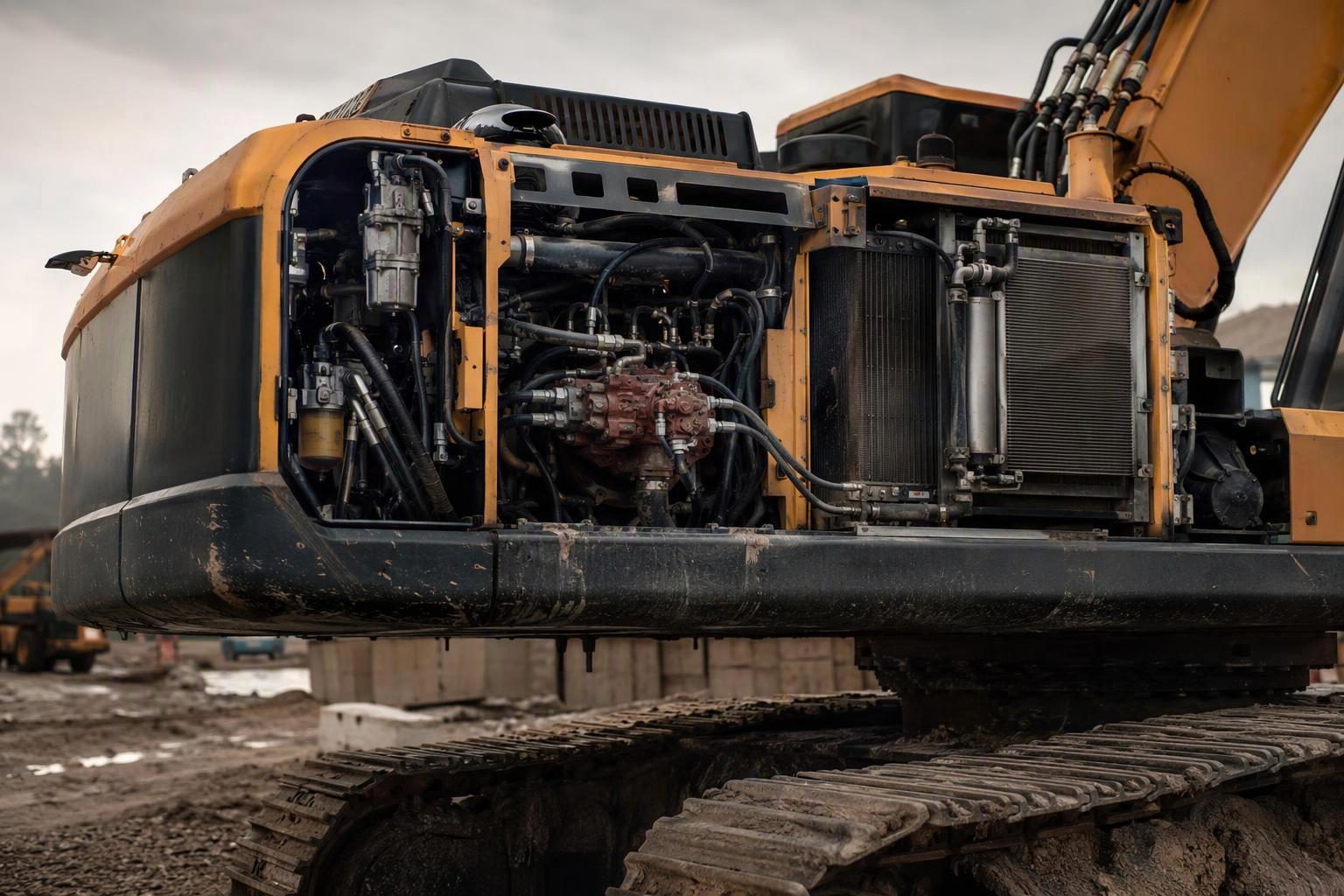
The two larger models step up power on the same engine platform. The HX260A L runs the Cummins B6.7 at 227 hp (169 kW) at 2,000 rpm with an operating weight of 59,520–61,530 lb (27,000–27,910 kg) (the HX260A L product page, current published page). Both are Stage 5 / Tier 4 Final machines.
Hyundai's stated reliability mechanism for these models is design and test rather than measured failure data. The company states that the upper and lower frame structure is designed to endure external shock and heavy workloads for many thousands of hours, and that rigid cycle testing, heat testing, vibration testing and shock load testing are conducted during design and manufacturing of all new models (the HX300A L product page, current published page). That is a vendor claim about the mechanism, not a measured failure rate, and it should be read as such.
For heat and cold-start resilience, the useful benchmark is regulatory rather than commercial. Under the definition of engine useful life in 40 CFR Part 1039, useful life is the period during which the engine is designed to function reliably without remanufacture, and the minimum for nonroad diesel engines at or above 37 kW is 8,000 hours or ten years, whichever comes first. That is a compliance floor, not a warranty term, and it says nothing about a specific cooling package. No heavy-duty cooling package is named in the published specifications, so treat cooling capacity as a dealer question, not a brochure feature.
Two evidence limits apply to this pair. First, no maintenance-interval table was located for either model, so the HX235 LCR schedule cannot be assumed to transfer. Second, the HX260A L product page contradicts itself on operating weight, giving 59,520–61,530 lb in the header and a different figure in the specifications block on the same page (the HX260A L product page, current published page). Resolve that discrepancy with your dealer before you use either number in a lift plan or a transport permit.
Conclusion
The reliability question in this class has a checkable answer, and it is not the sticker price. Hyundai's published machine warranty terms set 3 years or 3,000 hours full machine and 5 years or 10,000 hours structural, with powertrain coverage that reaches only the larger models in the line (Hyundai's published machine warranty terms, current published page). Above that sits a federal floor on the engine: 8,000 hours or ten years of useful life at or above 37 kW, with a minimum five-year emission-related term (40 CFR Part 1039, current eCFR text).
Uptime itself is a calculation, not a slogan. AEMP's hours-based utilization metric divides working hours by planned hours, and its idle metric divides hours at idle by total meter hours, with worked examples of 59.3% and 19.46% and no published benchmarks (the AEMP utilization metric definition, 2025 edition). Hyundai's Hi-MATE supplies the signals those formulas need, included for the first five years (Hyundai's Hi-MATE telematics documentation, current published page). Where the evidence stops, it stops cleanly: no OEM-published fuel burn in gallons per hour exists for these machines in excavator duty, and no quantified parts lead time is published anywhere in the OEM material reviewed. Those gaps are the ones to close with your dealer before you commit.
Key takeaways
Three things decide whether a 22–30 ton Hyundai excavator earns its keep, and all three are measurable before you sign.
Warranty is a document, not a promise. The full-machine term is 3 years or 3,000 hours; structural runs to 5 years or 10,000 hours; powertrain coverage does not reach every model in this class (Hyundai's published machine warranty terms, current published page). Read the exclusions on the machine you are actually buying.
Cost per hour is yours to calculate. AEMP's formulas turn Hi-MATE data into utilization and idle percentages, and the worked examples (59.3% and 19.46%) come with no published benchmarks, so your own baseline is the only honest comparison (the AEMP utilization metric definition, 2025 edition).
Parts availability is a network question. Hyundai's full-line product guide documents the model range and specifications, but published lead times are not part of it, so verify fill rates against your dealer's own history (current published version).
The failure mode is quiet. A fleet that skips these three checks does not fail loudly; it absorbs unplanned downtime at full day rate, which is the cost of inaction measured in dollars per hour, not in repair invoices.
Next Steps: Request Your Fleet Uptime Audit
The reliability question in this class has a checkable answer. A fleet that skips these checks absorbs unplanned downtime at full day rate. Do not rely on brochure promises; rely on documented matrices. Run a Tianheng Uptime Audit on your 22–30 ton fleet: pull your actual warranty documents, measure your real parts lead times, and compute your own utilization from Hi-MATE data using the AEMP formulas.
Request the B2B Documentation Package
Email our engineering team to receive the following verified documents for your specific fleet evaluation:
The Component-Level Warranty Matrix (for custom modifications)
Stock Position Reports on your top 3 high-wear part numbers
Official Diamond-Level Authorization Certificate
Global Sales & Engineering Desk:
⚡ Please include your target machine models (e.g., HX220A L, HX300A L) and specific application (e.g., standard digging, scrap handling, piling) in your email.
Recent News
1.Hyundai HX220PRO: China Stage IV 20-Ton Excavator for Efficient Work
2026-09-152.2026 Hyundai Excavator Guide: Match HX & HW Models to Jobs
2026-09-213.Hyundai HX1000: The Ultimate Heavy-Duty Mining Excavator
2026-09-114.Hyundai HX220HD Excavator Review: Specs, Price & Reliability
2026-09-015.Hyundai HX135G 13.5-Ton Excavator Specs & Guide
2026-09-076.Building Your Fleet: Hyundai Mini vs. Crawler Excavators
2026-08-17


